ZF Transmissions: Torque Converter, 8HP, Maintenance & BMW Myth
Discover the superiority of ZF torque converter transmissions, 8HP series features, BMW synergy, and the "lifetime fluid" myth. Get essential maintenance tips!


In the automotive world, transmissions represent one of the absolute pinnacles of mechanical engineering. When it comes to performance, durability, and driving dynamics, the ZF (Zahnradfabrik Friedrichshafen) brand is generally considered the gold standard. So, what are the core features that separate the torque converter transmissions developed by this German manufacturer from other technologies?
Based on clutch types, we can divide the transmission world into three main categories: Dual-Clutch (DSG, EDC, DCT), Torque Converters (ZF, EAT8), and Continuously Variable Transmissions (CVT).
- Dual-Clutch Systems (DCT/DSG): These house physical clutch friction plates. Because gear shifts happen in mere milliseconds, they feel incredibly sporty. However, since they operate on mechanical friction, they are prone to heat and wear in heavy stop-and-go traffic.
- CVT (Continuously Variable Transmission): Generally preferred by Japanese automakers, this system features infinite gear ratios. You don't feel the gear shifts at all—it's buttery smooth—but it is far removed from a performance-oriented driving feel.
- Torque Converter Systems: Transmissions like the ZF and EAT8 fall into this group. Instead of a physical friction plate, the system features a fluid coupling that transfers power via fluid pressure. While these systems were historically known as sluggish and fuel-heavy, modern ZF technology achieves staggering 200-millisecond shift times, making it the biggest rival to dual-clutch systems.
You can review the performance comparison of different transmission types across various driving scenarios in the graph below:
Transmission Type Performance Comparison
The Architecture and Naming Convention of the ZF Family
Transmissions on the market are generally classified by the maximum torque capacity they can handle. ZF's 8-speed series (8HP), which is the most widely used in passenger cars, follows this exact logic.
- 8: Number of gears (8-Speed)
- H: Hydraulic (Torque Converter infrastructure)
- P: Planetary Gearset system
Here is the breakdown of ZF variants based on engine displacement and vehicle type:
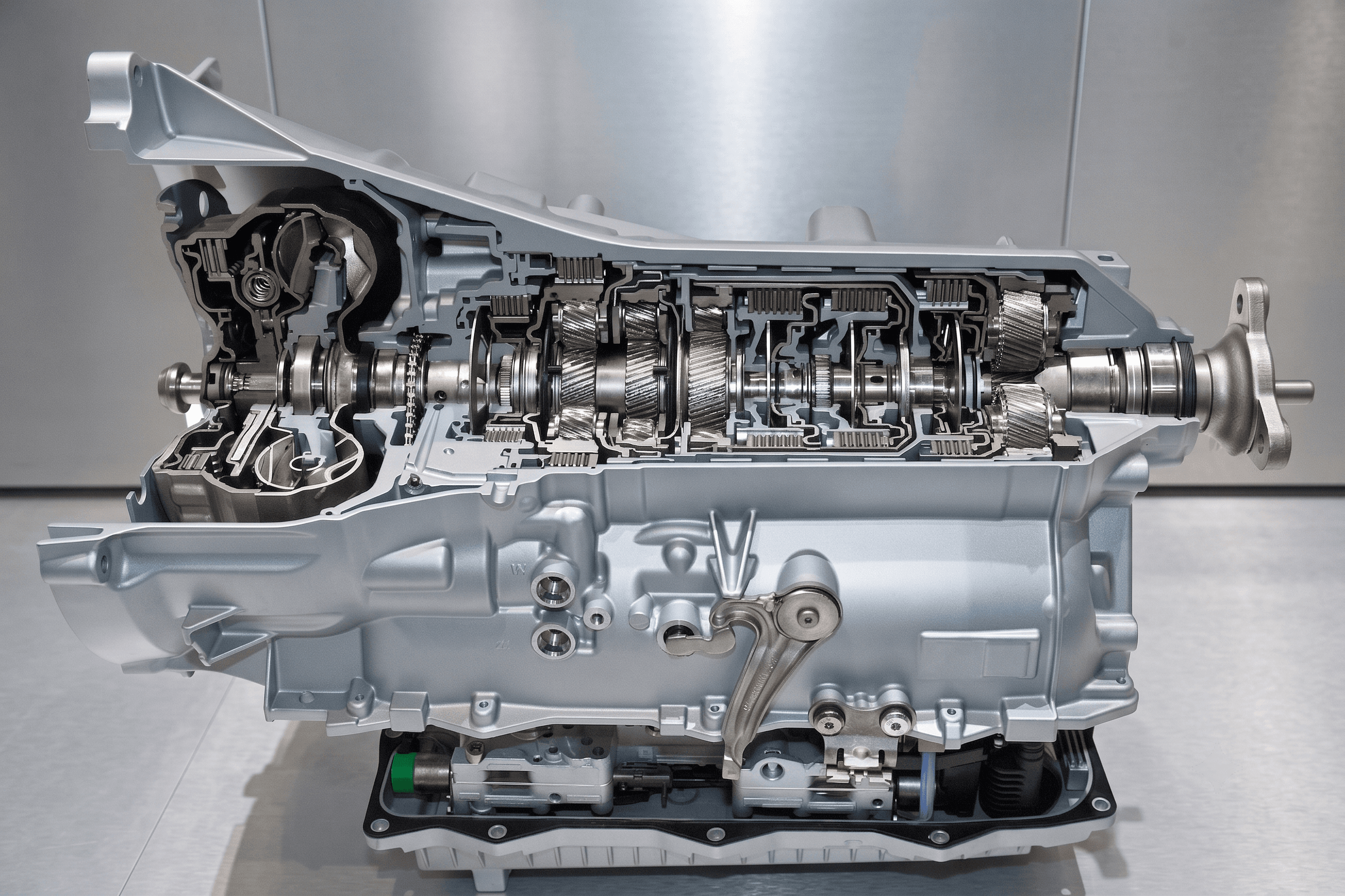
ZF8HP
The Pinnacle of Software Engineering: The Synergy Between BMW and ZF
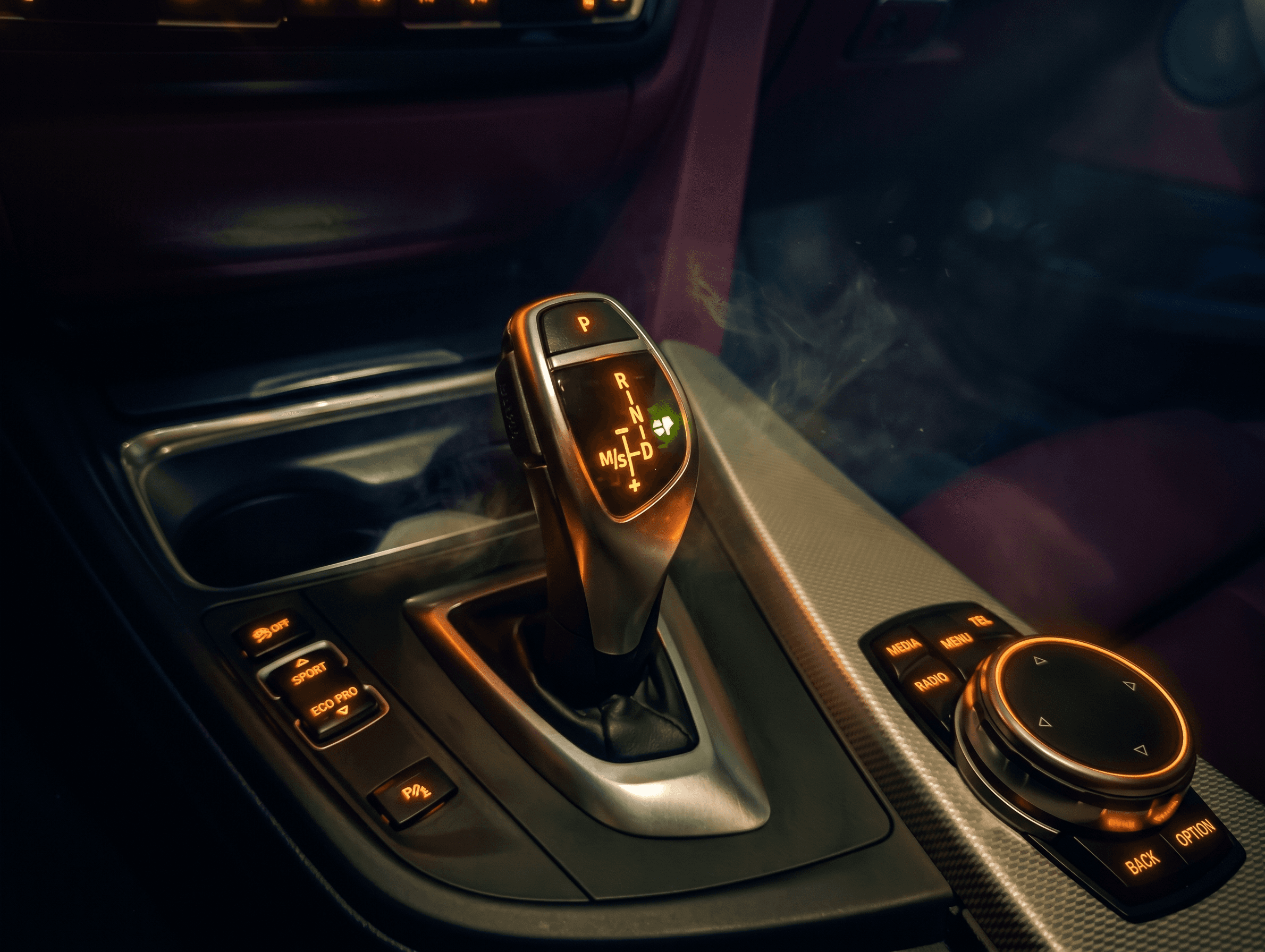
As an independent supplier, ZF provides transmissions to many premium manufacturers like Audi, Aston Martin, Jaguar, and Land Rover. Despite this, the name ZF is mostly associated with BMW in automotive literature. The reason for this lies not in the mechanical hardware, but in the software calibration.
The software (Steptronic) applied to the transmission control unit (TCU) by BMW engineers achieves flawless synchronization with engine RPM and throttle response. Sensing the driver's intent to hold a gear when lifting off the throttle entering a corner, or smoothly dropping multiple gears in an instant during a sudden acceleration request, are direct results of this harmony. Even if the hardware is identical, the algorithms written by the automakers can completely transform the character of the transmission.
BMW ZF
Common Misconceptions and Known Issues
- The Fluid Change Myth: One of the most common misconceptions in the automotive industry is the belief that fully automatic transmissions have a "lifetime fluid." As with all mechanical systems, the transmission fluid and pan in ZF transmissions must be replaced according to the manufacturer's recommendations (usually between 50,000 to 60,000 miles / 80,000 to 100,000 km) to maintain torque converter health and shift quality. If neglected, it can lead to turbine failures and harsh, clunky gear shifts.
- The Fuel Consumption Stigma: The old perception that 4- or 5-speed torque converter systems guzzle gas is totally obsolete today. Thanks to its tall 8th gear ratio, the ZF 8HP series maximizes fuel efficiency by keeping the engine at very low RPMs during highway cruising. Because power transfer losses are minimized, it has reached a level where it can easily rival manual transmissions in terms of efficiency.
Ultimately, a modern torque converter transmission—backed by the right software—manages to offer the optimum balance in today's automotive industry with its high torque capacity, longevity, and millisecond-quick shifts.
ZF 8HP Special: The "Lifetime Fill" Myth and BMW's Wordplay
If you own or are considering buying a BMW (or another brand with a ZF transmission), the most common phrase you'll hear from dealerships is: "These transmissions have a lifetime fill; they don't require periodic maintenance or fluid changes."
Sounds great, right? But the reality is quite different.
ZF
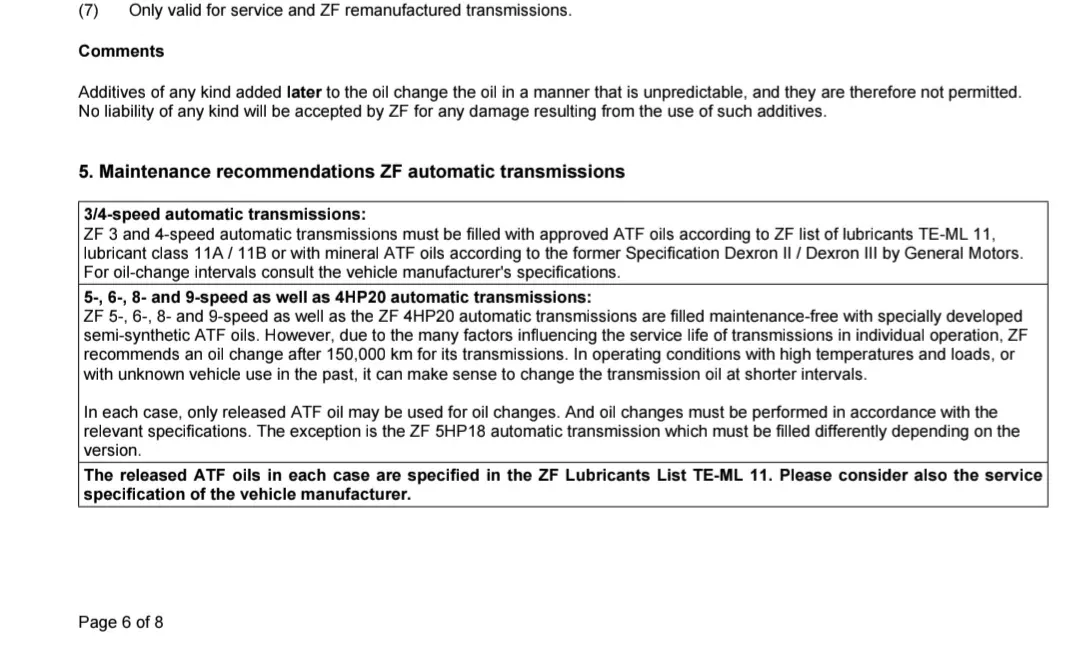
If we look at ZF’s official maintenance document (TE-ML 11), it states that these transmissions are technically filled with "maintenance-free" fluid from the factory. However, the very next sentence drops the real truth: "ZF recommends an oil change after 150,000 km (approx. 93,000 miles)... In operating conditions with high temperatures and loads, or with unknown vehicle use in the past, it can make sense to change the transmission oil at shorter intervals."
So Why is 50,000 - 75,000 Miles Recommended? For spirited drivers, those navigating heavy stop-and-go traffic, or anyone running an engine tune, ZF's definition of "high temperatures and loads" is practically a daily occurrence. Furthermore, as the document points out, waiting for the 150,000 km mark on used cars with an unknown history is a complete gamble. That’s why transmission specialists and renowned shops like FCP Euro strongly advise against waiting for the 150,000 km (93,000-mile) mark. To prevent premature wear, they highly recommend a preventive fluid and filter service between 50,000 and 75,000 miles (80,000 - 120,000 km).
So why does BMW stubbornly insist on "lifetime"? An explanation from renowned industry experts at FCP Euro pretty much sums it up: BMW tests these transmissions up to about 100,000 miles within their own "acceptable rate of failure." In other words, BMW's dictionary definition of "lifetime" is actually just 100,000 miles. Why? Because after this mileage, the vehicle is already out of extended warranties and goodwill repair limits. In short, any transmission failure after 100,000 miles is no longer BMW's problem—it becomes entirely yours.
If you want to keep your car running with day-one performance for years to come, forget the word "lifetime" and stick to ZF's own maintenance schedule.
Source: https://bimmerlife.com/2023/12/24/the-not-so-lifetime-zf-8hp-transmission-fill/
How to Tell if Your ZF Transmission Needs Maintenance
There are ways to tell if your transmission fluid is starting to degrade. If you observe the following symptoms, especially in a ZF 8HP approaching the 50,000 to 60,000-mile mark, it's time for a service:
- Cold Start Groan/Whine: A faint humming or groaning noise coming from the transmission when you first start the car in the morning (which goes away as it warms up) is one of the first signs that the fluid is losing its viscosity.
- Hanging Gears When Cold: Also when the engine is cold, if the first few gear shifts take longer than usual, and the car seems reluctant to upshift—unnecessarily holding the revs (hanging)—this is a classic symptom of old fluid.
Critical Details to Watch Out For During Maintenance: Servicing a ZF 8HP isn't a simple "drain the old fluid, pour in the new" job. The filter in these transmissions is integrated directly into the plastic pan. This means that during a service, you aren't just replacing the fluid; the entire bottom plastic pan along with the filter must be completely replaced.
The most crucial part of the process is the filling stage. The initial fill is done while the transmission is completely cold. Then, the engine is started, and the fluid temperature is allowed to reach exactly between 40 and 50 degrees Celsius (104 - 122 degrees Fahrenheit). The technician cycles through all the gears to ensure the fluid disperses throughout the system, followed by a second top-off fill to finish the job. Because of this, it is absolutely essential that this procedure is done by professionals equipped with diagnostic scan tools capable of monitoring fluid temperatures.
Comments (0)
🌍 Drivisual.tv is visited from over 60 countries. No matter what language you write in, your thoughts can help a fellow car enthusiast on the other side of the world thanks to our instant AI translation. Feel free to share your thoughts in your native language!
No comments yet. Be the first to share your thoughts!
Leave a Reply