
Renault Megane 4 Boot Water Leak: Hidden Danger!

Water ingress into the boot is a problem that has been reported by multiple Renault Megane 4 owners, particularly after heavy rain or washing the car.
The problem is not always obvious at first. The upper part of the boot may appear completely dry, while lifting the boot floor reveals water collecting in the boot well or spare-wheel compartment. In some cases, the boot carpet itself becomes wet and may eventually lose its shape.
What makes the issue particularly noteworthy is that these reports are not limited to a single model year. User reports include Megane 4 vehicles from 2020, 2021 and 2024, with some owners reporting that the problem returns after rainfall while others notice water ingress after washing the car.
If you find water in the boot of your Megane 4, therefore, it should not automatically be assumed that the boot lid simply has not closed properly.
Where Is Water Getting Into the Megane 4 Boot?
The most important point to understand is this:
There is no single water-entry point that applies to every Megane 4.
Owner experiences point towards several possible areas of water ingress. Rather than replacing a particular component or applying silicone or sealant at random, the first step should be identifying exactly how and where water is entering the vehicle.
Areas reported by owners and worth checking include:
- Around the rear tail lights
- Rear bumper-to-body joints
- Around the boot lid
- Rubber boot-lid stops and bumpers
- Around the rear window
- Bodywork joints and sealing points
1. Around the Rear Tail Lights
One of the areas that repeatedly appears in Megane 4 boot-water complaints is around the rear tail lights.
For example, one 2020 Megane 4 owner reported water entering the boot after heavy rain, specifically noting that water was coming in around the edges of the rear light. The same owner also reported that the boot carpet had become wet as a result.
This means that if you discover water in the spare-wheel well, it is worth looking beyond the well itself and checking whether water is travelling downwards or inwards from a higher point.
If a rear light is removed, its seals, mounting points and surrounding bodywork joints can also be inspected.
2. Rear Bumper and Bodywork Joints
The areas where the rear bumper meets the bodywork should also be considered when investigating a water leak.
The difficulty here is that the point where water becomes visible inside the car is not necessarily the point where it entered the vehicle.
Water can enter through a joint elsewhere on the bodywork and then travel along the structure before eventually reaching the lower part of the boot. In such a case, an owner who finds water in the boot well may not find the actual leak by looking directly underneath the wet area.
For this reason, leak diagnosis should focus not only on the wet area but also on the route the water has taken.
3. Boot Lid and Rubber Stop Areas
The rubber stops and adjustment points where the boot lid contacts the bodywork are another area worth checking.
These components make contact with the body when the boot is closed. However, adjustment issues, deformation or sealing problems could potentially allow water to make its way towards the boot.
It is therefore worth checking whether the boot lid sits evenly on both sides, whether the rubber seal makes proper contact and whether there are any unusual gaps around the boot opening.
4. Around the Rear Window
It would also be a mistake to assume that water can only enter through the boot lid or rear lights.
The sealing around the rear window should also be considered when investigating water ingress.
This is particularly worth checking if the vehicle has previously had its rear glass removed or replaced, as the condition of the seal around the glass may need additional inspection.
The important point is that the place where water appears inside the boot may not be the same place where it originally entered the vehicle.
How Can You Tell If Your Megane 4 Has a Boot Water Leak?
One of the easiest ways to identify the problem is to inspect the boot floor after heavy rain or washing the vehicle.
The following signs can indicate water ingress:
- Water in the spare-wheel well
- A damp boot carpet
- Wet boot insulation
- A musty or mouldy smell in the boot
- Damp boot trim after rainfall
- Repeated water accumulation in the boot well
Several of these symptoms appear in owner reports. One owner reported significant amounts of water accumulating in the boot after every rainfall, while another stated that water had been entering the boot well for approximately five months after both rain and car washing.
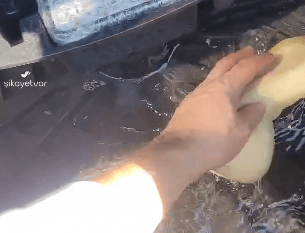
How Do You Find a Megane 4 Boot Water Leak?
The most important step is finding the actual point where the water enters the vehicle.
Simply removing the water from the boot or drying the carpet will not solve the underlying problem. If water continues to enter, the same issue will return.
A controlled leak test can be carried out as follows:
- Completely empty the boot.
- Remove the boot carpet and, if possible, the spare-wheel well components.
- Completely dry any wet areas.
- Make sure the inside of the boot is well illuminated.
- Have one person observe from inside the boot while another applies water carefully from outside.
- Start by checking around the boot lid and its rubber seal.
- Test the right and left rear light areas separately.
- Check the rear bumper and bodywork joints.
- Inspect the area around the rear window.
- Follow the water from the first visible point back towards its actual entry point.
Rather than soaking the entire rear of the vehicle at once, testing individual areas one at a time can make the source of the leak much easier to identify.
What Do Owner Experiences Tell Us?
Owner experiences relating to Megane 4 boot water ingress are not completely identical.
For example, one owner reported removing the right rear wheel and brake drum before finding gaps that appeared to allow water through. The owner then applied sealant to the areas where they had observed the water entering.
Solutions like this can be found in forum and social-media discussions.
However, there is an important point to remember:
A silicone or sealant repair that works on one vehicle does not necessarily identify or fix the actual leak on another vehicle.
Applying sealant randomly before identifying the source of the water may only temporarily hide the problem.
More importantly, it could potentially cause water to take a different route through the bodywork.
For this reason, the leak should be identified as precisely as possible before applying any sealant.
Why Is Water in the Boot a Problem?
Finding a few centimetres of water in the spare-wheel well may initially seem like nothing more than a cosmetic issue. However, if moisture remains inside the vehicle for an extended period, it can cause additional problems.
These can include:
- Deformation of the boot carpet
- Saturated insulation materials
- Mould growth
- Unpleasant or musty smells
- Long-term corrosion risk to metal surfaces
- Moisture affecting equipment stored in the boot
There are real-world owner reports demonstrating some of these consequences.
For example, one Megane 4 owner whose vehicle was still under warranty reported that the boot carpet became completely soaked after the water-ingress problem occurred, causing the carpet to lose its original shape. The owner stated that it no longer sat correctly, moved around and had collapsed in places.
Another Megane 4 owner reported that the boot trim became mouldy after rainfall.
This is why simply confirming that the car "is no longer leaking" may not be enough. Any materials that have become wet should also be inspected and properly dried or replaced where necessary.
Is Boot Water Ingress a Chronic Megane 4 Problem?
Some Megane 4 owners online describe boot water ingress as a "common" or "chronic" problem.
For example, one 2021 Megane 4 owner reported that the vehicle was taking in water after both rain and washing, and that the car had been taken to an authorised dealer seven times for the same issue.
Another owner reported persistent water ingress into a 2020 Megane 4 during heavy rain, while another 2021 Megane 4 owner stated that water regularly accumulated in the boot well after rainfall.
In another, more recent report, the owner of a 2024 Megane 4 stated that the vehicle had experienced boot water ingress since it was purchased new and had already been left at a dealer twice for inspection. The owner later reported mould developing in the boot trim after rainfall.
The fact that similar complaints appear across different vehicles and model years is certainly noteworthy.
However, an important distinction needs to be made:
There is no official documentation showing that Renault has recognised boot water ingress as a universal "chronic fault" or confirmed manufacturing defect affecting all Megane 4 vehicles. It would therefore be inaccurate to describe it as a confirmed defect affecting every Megane 4.
A more accurate description is that boot water ingress has been repeatedly reported by owners across different Megane 4 model years.
What Should You Do If Your Megane 4 Is Letting Water Into the Boot?
If your Megane 4 takes in water after rain or washing, the first priority should be identifying exactly where the water is entering.
If the vehicle is still under warranty, contacting an authorised Renault dealer and ensuring that the inspection and repair are documented is particularly important.
During the inspection:
- The exact water-entry point should be identified.
- The leak should not simply be dealt with by drying the affected area.
- The boot carpet and insulation should be inspected.
- All areas affected by water should be thoroughly dried.
- A further water test should be carried out after the repair.
- If the problem returns, the previous repair should be reassessed.
If the same problem returns after an earlier repair, simply applying another layer of silicone or sealant may not be enough. The reason why the original repair failed to provide a lasting solution should be investigated.
Conclusion
Boot water ingress is a problem that appears repeatedly in owner reports involving different Renault Megane 4 model years.
The rear tail-light area, boot-lid area, rear bumper-to-body joints and other bodywork sealing points are among the areas worth checking when investigating a leak.
However, there is no evidence that every Megane 4 has a single, identical water-entry point.
If you find water in the spare-wheel well or on the boot carpet, the best approach is therefore not to start applying silicone or sealant at random. Instead, identify exactly where the water is entering the vehicle first.
Once water ingress has occurred, simply drying the boot is not enough. The leak needs to be repaired, and any wet carpet, insulation or other affected components should also be inspected.
If you repeatedly find water in the same area after rain or washing the vehicle, investigating the leak as early as possible can help prevent more serious long-term problems involving moisture, unpleasant smells, mould and potential corrosion.
Complaints and Sources
The following sources are real owner complaints and observations reviewed while preparing this article.
1. Renault Megane Boot Water Ingress and Brake Noise Issue
The owner of a 2024 Renault Megane 4 1.3 TCe Icon reported experiencing boot water ingress from the time the vehicle was purchased new and stated that the boot trim developed mould after rainfall.
Şikayetvar – Renault Megane Boot Water Ingress and Brake Noise Issue
2. Megane Boot Carpet Damaged by Water Ingress Under Warranty
An owner reported that, after water entered a Megane 4 under warranty, the boot carpet became completely soaked and lost its original shape.
Şikayetvar – Renault Megane Boot Carpet Water Ingress
3. Recurring Megane Boot Water Ingress Problem
The owner of a 2021 Megane 4 reported that the boot took in water after both rainfall and washing and that the vehicle had been taken to an authorised dealer several times for the same problem.
Şikayetvar – Renault Megane Recurring Boot Water Ingress
4. Megane Boot Keeps Taking in Water
The owner of a 2020 Megane 4 1.5 Sedan reported water entering the boot during heavy rain, specifically stating that water was coming in around the rear light area.
Şikayetvar – Renault Megane Boot Keeps Taking in Water
5. Megane 4 Boot Takes in Water After Every Rainfall
The owner of a 2020 Megane 4 reported significant amounts of water accumulating in the boot after rainfall and stated that the protective lining inside the boot became completely wet.
Şikayetvar – Renault Megane 4 Boot Takes in Water After Every Rainfall
6. Water Continually Entering the Boot Well
A Megane 4 owner reported that water had been entering the boot well for approximately five months, both when it rained and when the vehicle was washed.
Şikayetvar – Water Continually Entering the Boot Well
7. Megane 4 Boot Takes in Water During Rain
The owner of a 2021 Megane 4 reported that water had been accumulating in the boot well after rainfall and suspected an insulation or assembly-related issue.
Şikayetvar – Megane 4 Boot Takes in Water During Rain
Video Sources
The following Megane 4 boot-water-ingress videos were also reviewed while preparing this article:
YouTube – Renault Megane 4 Boot Water Ingress Video 1
YouTube – Renault Megane 4 Boot Water Ingress Video 2
Note: Owner complaints represent individual experiences and do not, by themselves, establish that a particular vehicle has a manufacturing defect. The point of water entry can vary between vehicles, and a physical leak test is required for an accurate diagnosis.
Comments (0)
🌍 Drivisual.tv is visited from over 60 countries. No matter what language you write in, your thoughts can help a fellow car enthusiast on the other side of the world thanks to our instant AI translation. Feel free to share your thoughts in your native language!
No comments yet. Be the first to share your thoughts!
Leave a Reply