
1.3 TCe Chronic Failure: Thermostat Danger [Fatal Flaw]

The 1.3 TCe engine used in Renault, Nissan and Dacia models is a successful engine in terms of performance and efficiency. However, some owners have reported a potentially serious problem involving cracked thermostat housings and coolant leaks.
Thermostat and cooling-system complaints can be found among owners of models such as the Renault Megane, Clio, Captur and Dacia Duster. Recent user reports on Şikayetvar also include cases involving 1.3 TCe thermostat failures, cracked thermostat housings and the resulting loss of coolant.
In this article, we examine the Renault 1.3 TCe thermostat cracking problem, its possible causes, the warning signs to look out for, and the potential risks of allowing the engine to run without sufficient coolant.
Why Does the 1.3 TCe Thermostat Crack and Where Does It Fail?
The thermostat housing used on the 1.3 TCe engine is made from plastic. This is an important detail because the cooling system operates under high temperatures and pressure for extended periods.
Once the engine reaches operating temperature, the temperature and pressure within the cooling system constantly fluctuate. Over years of repeated thermal cycles, plastic components can age, potentially leading to sealing problems or cracks.
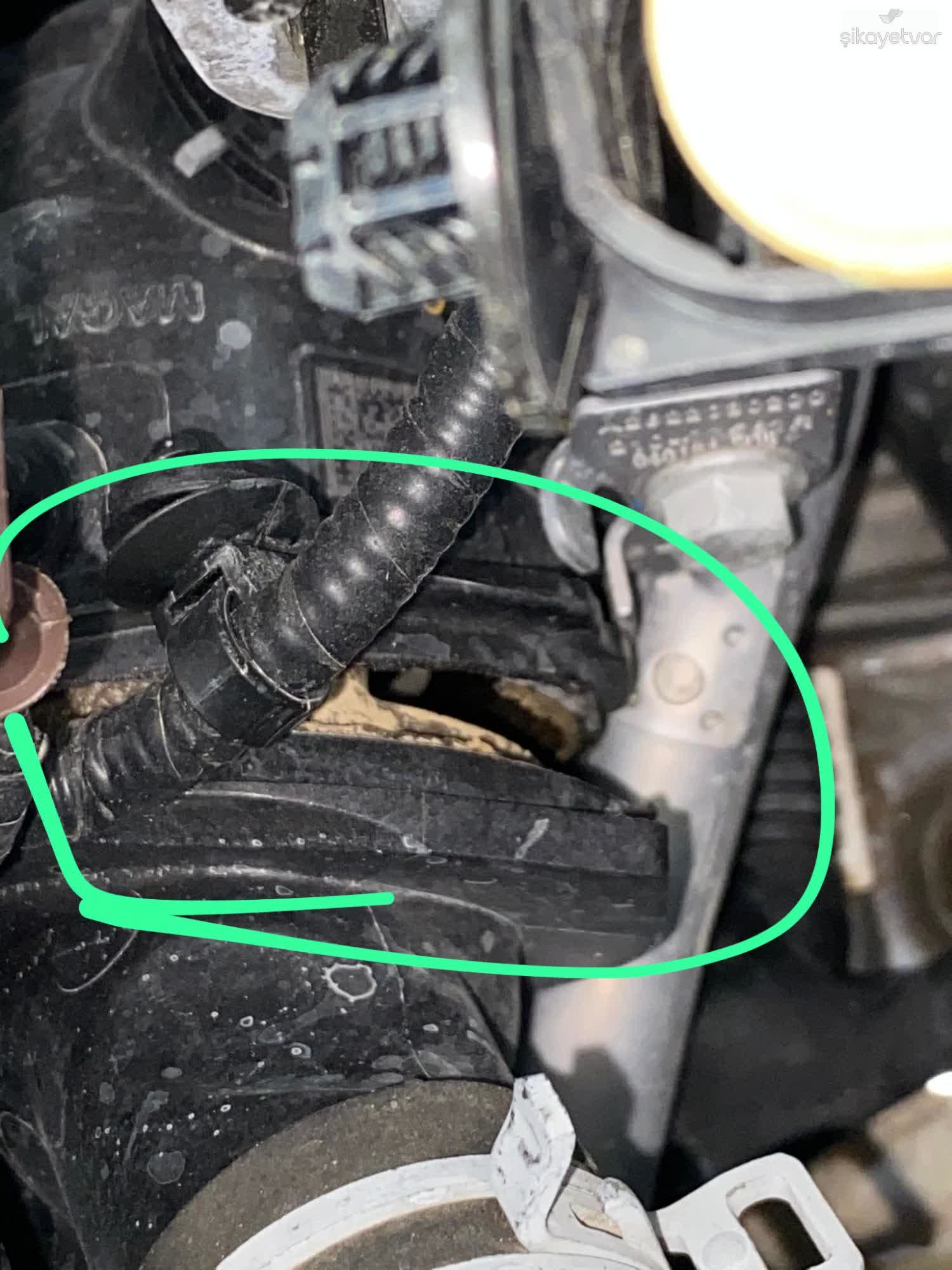
Renault 1.3 Tce thermostat
There are user reports of cracked thermostat housings and the resulting antifreeze/coolant leaks. For example, one Renault Captur 1.3 TCe owner reported that the thermostat housing was found to be cracked after the vehicle had completely lost its coolant.
There is an important point to consider here: it would not be correct to attribute a thermostat housing failure on a particular vehicle solely to mileage or driving style. Material ageing, thermal cycling, pressure, component manufacturing and operating conditions should all be considered together.
What Happens If the Thermostat Cracks?
A serious crack in the thermostat housing can cause coolant to escape rapidly.
Renault's own technical information states that the coolant level should be checked regularly, and that insufficient coolant can result in serious engine damage.

user-manual.renault
Therefore, if you notice any of the following:
- A falling coolant level
- An antifreeze smell
- Fluid traces in the engine bay
- An unexpected drop in the expansion tank level
- Rising engine temperature
- Cooling-system warning messages
the vehicle should not be driven any further.
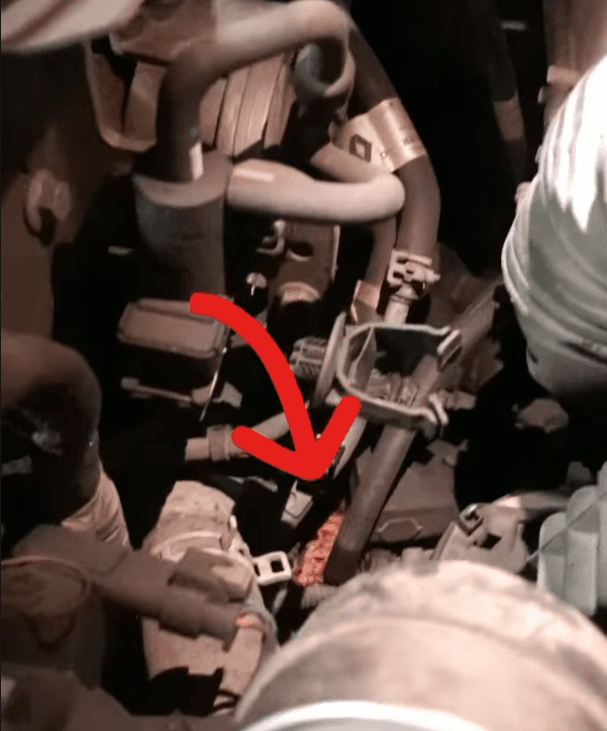
Renault 1.3 Tce Thermostat
In particular, rapid coolant loss caused by a cracked thermostat housing can leave the engine operating without adequate cooling. This can cause the engine temperature to rise and potentially result in serious engine damage.
At What Mileage Does the 1.3 TCe Thermostat Problem Occur?
Certain mileage ranges are frequently mentioned online and in owner communities when discussing the 1.3 TCe thermostat problem. However, there is no official Renault maintenance interval confirming that the thermostat must be replaced between 40,000 and 60,000 km. This range should therefore be regarded as a precautionary recommendation rather than an official replacement interval.
Rather than treating 40,000–60,000 km as a mandatory replacement interval, a more appropriate approach is to have the cooling system and thermostat housing inspected, particularly as the vehicle's mileage increases.
Renault's official maintenance information also recommends following the vehicle's maintenance schedule and the intervals specified by the manufacturer.
Important: Reaching 40,000–60,000 km does not mean that every 1.3 TCe engine will inevitably suffer a cracked thermostat. This mileage range should therefore not be treated as a definitive “thermostat replacement mileage”.
Does Replacing the Renault 1.3 TCe Thermostat Completely Solve the Problem?
If the thermostat housing has cracked or a coolant leak has been confirmed, the component should be replaced.
It is important to use a genuine Renault part or a reliable OEM component that is compatible with the vehicle.
Renault provides official information regarding genuine replacement parts and authorised servicing as part of its after-sales services. Renault also states that its genuine replacement parts and repairs are covered by warranty under the applicable conditions.
When replacing the thermostat, therefore, it is worth checking more than simply the price of the part:
- The component manufacturer
- OEM/part number
- Whether the seals have also been replaced
- Whether the cooling system has been correctly refilled
- Whether any air remains trapped in the cooling system
- Whether a leak test has been carried out after installation
Real-World 1.3 TCe Thermostat Problems Reported by Owners
There are several owner reports showing that this is not simply a theoretical issue.
For example, on Şikayetvar, one owner of a 2020 Renault Megane 1.3 TCe reported experiencing a thermostat failure at 50,000 km while driving, followed by coolant loss and serious engine damage. The owner reported an engine repair cost of approximately TRY 260,000. This figure was reported by the individual owner and should not be considered a standard repair cost for all vehicles.
Similarly, another owner of a 2021 Renault Megane 1.3 TCe stated that, after a thermostat failure at 68,000 km, they were told that the entire engine needed to be replaced. In the owner's 2025 complaint, an authorised service reportedly quoted TRY 800,000 for an engine replacement.
These examples demonstrate why a small coolant leak from the thermostat housing should be taken seriously. However, these individual reports do not prove that every 1.3 TCe engine will experience the same failure or suffer the same consequences.
What Are the Symptoms of a 1.3 TCe Thermostat Failure?
A problem with the thermostat housing does not always begin with the thermostat suddenly “bursting”.
The following symptoms are worth paying attention to:
Falling Coolant Level
A gradual drop in the coolant level in the expansion tank can be an important indication that there is a leak somewhere in the cooling system.
Renault also specifically recommends checking the coolant level regularly.
Antifreeze Smell
A distinctive antifreeze smell coming from the engine bay can be caused by coolant reaching a hot engine component or surface.
Fluid Traces in the Engine Bay
Wet areas or dried coolant residue may appear around the thermostat housing, hose connections and other cooling-system components.
Rising Engine Temperature
If a significant amount of coolant is lost, the engine temperature can rise above its normal operating range.
At this point, rather than continuing to drive, the vehicle should be stopped somewhere safe and professional assistance should be sought.
An Early-Warning Solution Using a Smart Sensor Module
Some owners have chosen to use an additional coolant level sensor as a precaution against a sudden leak from the thermostat housing.
For example, some DIY projects use a non-contact liquid-level sensor mounted on the outside of the expansion tank, allowing the coolant level to be monitored using a microcontroller.
Such a system can provide an additional layer of protection by helping the driver detect a sudden loss of coolant at an early stage.
However, such a system is not a factory-fitted engine protection system and should not be considered a replacement for the vehicle's original cooling-system monitoring and maintenance procedures.
What Can Be Done to Reduce the Risk of a Thermostat Crack?
There is no guaranteed method of completely preventing a thermostat housing from cracking. However, a few simple checks can help identify a problem at an early stage.
1. Check the Coolant Regularly
Check the level in the expansion tank when the engine is cold.
If the level keeps dropping, do not simply keep topping up the coolant and continue driving. The source of the leak should be investigated.
Renault also states that insufficient coolant can result in serious engine damage.
2. Have the Thermostat Housing Inspected
Particularly on higher-mileage 1.3 TCe vehicles, it may be worthwhile having the thermostat housing and surrounding connections inspected during routine servicing.
3. Check the Car Before a Long Journey
Before a long journey, with the engine cold, check:
- The coolant level
- Any visible signs of leaks in the engine bay
- The smell of antifreeze
- Any warning messages on the instrument cluster
Taking a few minutes to carry out these checks is a simple but useful habit.
4. Do Not Push the Car If It Is Losing Coolant
Continuing to drive a vehicle for an extended period after discovering coolant loss can turn a relatively small leak into a much more expensive engine problem.
If you suspect a problem, it is safer to have the cooling system inspected by a Renault authorised dealer or a specialist workshop. Renault's official service and maintenance page provides information about authorised servicing and maintenance.
Conclusion: The 1.3 TCe Thermostat Problem Should Be Taken Seriously
The Renault 1.3 TCe thermostat cracking problem can have serious consequences, particularly if it results in rapid coolant loss.
However, it would not be accurate to say that every 1.3 TCe vehicle will inevitably suffer a thermostat failure at a particular mileage. Owner reports available online show that thermostat and cooling-system problems can occur at different mileages.
For this reason, the most important things are to monitor the coolant level, never ignore signs of a leak, and have the thermostat housing inspected during routine maintenance.
A few minutes of checking the vehicle before a long journey could potentially help prevent much more serious engine damage caused by a cooling-system failure.
Official maintenance and servicing information for Renault 1.3 TCe owners:
Renault's official information regarding coolant checks:
Renault Sıkça Sorulan Sorular – Soğutma Sıvısı
Real-world owner experiences and thermostat complaints:
Şikayetvar – Renault Termostat Şikayetleri
Comments (3)
🌍 Drivisual.tv is visited from over 60 countries. No matter what language you write in, your thoughts can help a fellow car enthusiast on the other side of the world thanks to our instant AI translation. Feel free to share your thoughts in your native language!
UK_Captur
Dusterci
mehmet gülçiçek
Leave a Reply