DQ200 DSG 6th Gear & Reverse Loss: Shift Fork Failure & Repair
Lost 6th gear or Reverse in your DQ200 DSG? Discover the causes, symptoms, and permanent repair solutions for shift fork failure with upgraded parts.


Contents
- Loss of Reverse (R) and 6th Gear: The Shift Fork Failure
- Structure of the Shift Fork and Causes of Breakage
- Symptoms and Physical Effects of the Failure
- Risk of Secondary Damage: Impact on the Mechatronic Unit
- Repair Process and Upgraded Fork Installation
- 2026 Replacement and Repair Costs in Europe
- Explore the Working Principles of Other Transmission Technologies
Loss of Reverse (R) and 6th Gear: The Shift Fork Failure
The third major issue encountered in DQ200 DSG transmissions occurs directly within the mechanical gear train: the shift fork failure. While we previously addressed hydraulic issues in our DQ200 DSG Mechatronic Failure: Accumulator Explosion and Solutions article, and friction surface problems in DQ200 DSG Clutch Judder: Causes, Solutions, and Extending Lifespan, this condition stems from the physical breakage of an internal component, resulting in the permanent loss of Reverse and 6th gear.
Structure of the Shift Fork and Causes of Breakage
Structurally, DSG gearboxes are automated manual transmissions equipped with synchronizers. Gear shifts are executed by shift forks driven by the pushrods of the mechatronic unit. These forks slide the synchronizer sleeve back and forth to lock the desired gear onto the shaft. In the DQ200, 6th gear and Reverse (R) share the same shift fork mechanism.
To enable the forks to slide smoothly over the metal synchronizer sleeves with minimal friction, their contact points are fitted with plastic (Teflon/polymer) sliding bearings. The continuous thermal cycling (heating and cooling) of the transmission fluid gradually degrades the molecular structure of this plastic, causing it to harden and become brittle over time.
In addition to material fatigue, driving habits such as shifting from D (Drive) to R (Reverse) before the vehicle has come to a complete stop rapidly accelerate this wear. To learn more about avoiding user-induced damage, you can read our guide: 7 Driving Mistakes That Kill Your DQ200 DSG Transmission. Eventually, under mechanical stress, these plastic bearings shatter and lodge into the fork track.
Symptoms and Physical Effects of the Failure
When the plastic bearing breaks or dislodges, mechanical tolerances are lost, and the vehicle exhibits the following symptoms:
- A distinct, harsh metal-to-metal scraping noise is heard when shifting into Reverse. This occurs because the fork cannot push the synchronizer sleeve far enough, causing the gear teeth to grind against each other without fully engaging.
- The vehicle fails to engage Reverse entirely. The system detects the failure, enters a protective state, and the gear indicator lights (PRNDS) on the dashboard begin to flash.
- While driving, the transmission control unit recognizes the jammed fork and disables the 6th gear pathway. Upon acceleration, the transmission will skip 6th gear, shifting directly from 5th to 7th.
Risk of Secondary Damage: Impact on the Mechatronic Unit
If left unresolved, this mechanical failure poses a high risk to the hydraulic system. When the fork is jammed in the gear track, the mechatronic unit attempts to force the gear engagement by continuously increasing hydraulic pressure behind its piston. Because the piston cannot move, system pressure spikes. This sustained stress can cause pressure cracks in the aluminum housing of the mechatronic unit. Furthermore, the shattered plastic pieces and metal shavings from the grinding synchronizers contaminate the gear oil, leading to accelerated wear of internal bearings.
Repair Process and Upgraded Fork Installation
A permanent repair for this issue requires the transmission to be removed from the vehicle and the mechanical casing to be disassembled.
- The transmission casing is split in half. The gear oil is drained, and all internal cavities are cleaned with specialized solvents to remove broken plastic fragments and metallic sludge.
- The broken OEM 6/R shift fork is removed from the selector shaft. It is typically replaced with an upgraded aftermarket fork, CNC-machined from a solid metal alloy, eliminating the plastic sliding bearings and preventing future breakages.
- After verifying the selector pathways, the transmission is sealed with fresh gear oil, reinstalled in the vehicle, and calibrated via a mechatronic adaptation drive.
2026 Replacement and Repair Costs in Europe
Because this repair involves a complete gearbox teardown, labor accounts for a significant portion of the cost.
- Independent Specialists: The total cost for installing an upgraded metal shift fork, internal cleaning, fresh transmission fluid, and labor averages between €1,200 and €1,800 across European markets in 2026.
- Authorized Dealerships: Official dealership protocols generally do not support internal gearbox repairs, often quoting for a complete gear train or transmission replacement. Consequently, dealership costs can easily exceed the €3,500 to €5,000 range.
Explore the Working Principles of Other Transmission Technologies
If you want to understand how other transmission types used in the automotive industry work outside of DSG (Dual-Clutch) technology, check out our other guides:
- What is a CVT Transmission? Continuously Variable Transmission Explained
- Peugeot / Citroen E-DCS6 Mild Hybrid Transmission Technology
- Mercedes-Benz 7G-Tronic
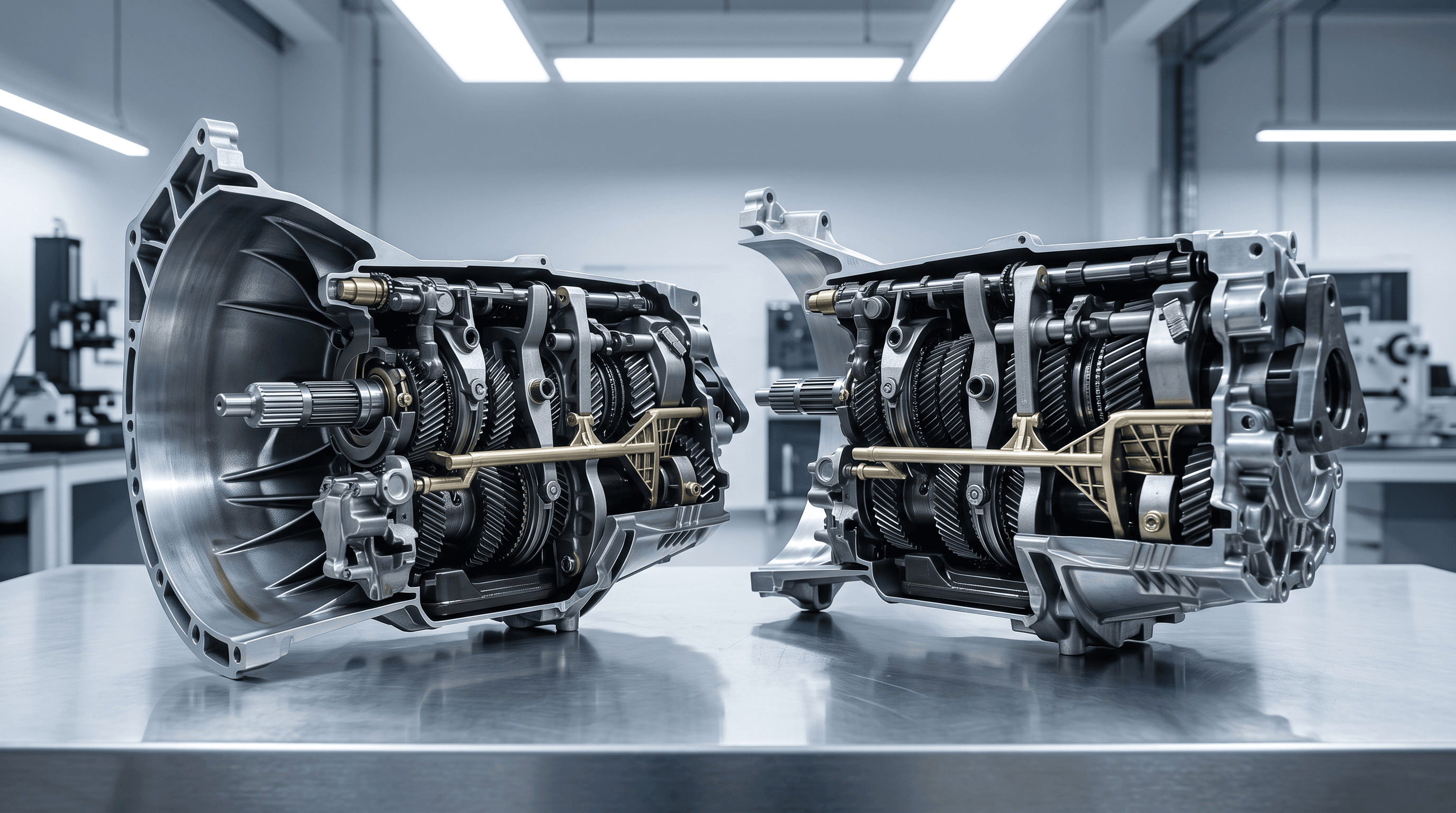
Mechanical teardown and rebuild of the DQ200 DSG gear train exposing synchronizers and shift forks.
Comments (0)
🌍 Drivisual.tv is visited from over 60 countries. No matter what language you write in, your thoughts can help a fellow car enthusiast on the other side of the world thanks to our instant AI translation. Feel free to share your thoughts in your native language!
No comments yet. Be the first to share your thoughts!
Leave a Reply