Is 1.5 TSI Evo2 Reliable? [Fatal Flaw & Oil Consumption]
The 1.5 TSI replaced the EA111, but is it truly bulletproof? If you are buying a used model, the first warning sign you must check is...


1.5 TSI Engine: Technical Specs, Common Problems, and Full Details
Since the second half of 2017, the Volkswagen Group retired the 1.4 TSI engine we saw on the roads for years and replaced it with the 1.5 TSI unit. Since then, we have seen this engine in almost every model using the MQB platform, such as the Golf, Passat, Tiguan, Superb, and Octavia.
Let's clear up a myth first: Severe issues frequently discussed in the market, like timing chain stretching or piston cracking, were left behind with the very old EA111 engines. The 1.5 TSI is a member of the completely different EA211 evo family. It’s an engine with increased cylinder capacity, a redesigned interior, and has proven its reliability. However, to truly understand this engine, you need to know its different versions based on production years and its overall character.
Engine Versions: What is the Difference Between Evo1 and Evo2?
Let's summarize the topic without getting bogged down in complex engine codes. The 1.5 TSI engine basically exists in two generations in the market:
- Evo1 (First Generation): The series produced between 2017 and 2021. (Registered under engine codes DADA or DPCA). These make up the vast majority of 1.5 TSIs on the market.
- Evo2 (Current Generation): The revised series launched in 2022, where some of the rough edges of the first generation were smoothed out. (Registered under DXDB or DNKA codes).
In both generations, versions producing 150 horsepower (PS) and 250 Nm of torque are the most widely preferred across Europe.
Performance and Highway Driving Dynamics
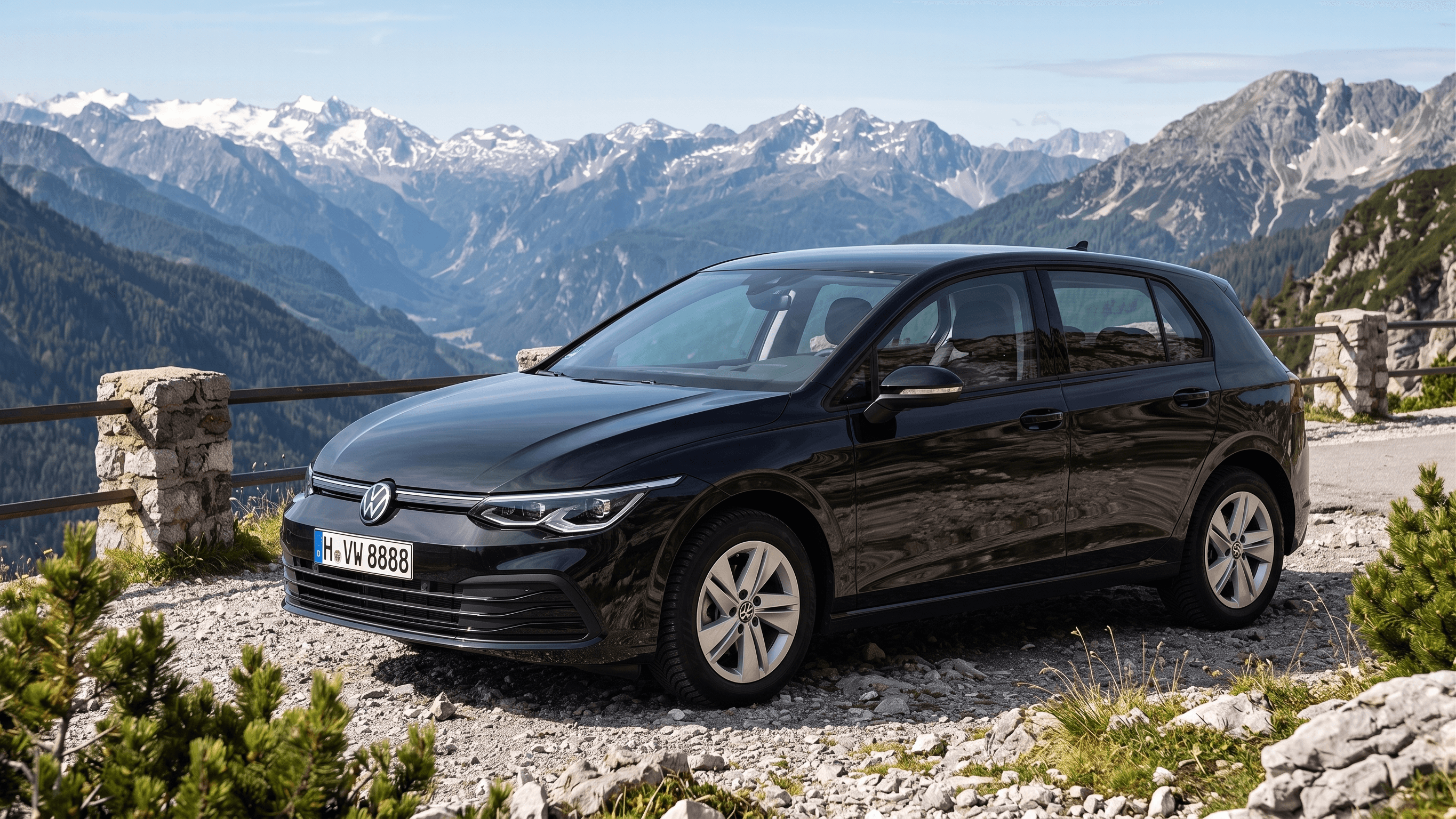
Volkswagen Golf 1.5 Tsi
The 250 Nm torque of the 1.5 TSI is fully at your disposal at a very low band like 1500 rpm. In daily use, this offers fantastic low-rev vitality. During my no-talking, smooth POV test drives on European high-speed highways, I had the opportunity to closely test the 1.5 TSI's highway stability and high-speed responses. When you combine driving vitality, performance, and the speed of the DSG, it is a highly enjoyable engine.
You can access the videos where I tested the 1.5 TSI Hybrid version by clicking HERE.
However, you should know that due to its character, this engine is not very eager to rev high. When you pass 4500-5000 rpm, the engine sound thins out a bit; traction doesn't drop, but it gives an "efficient" high-rev feeling rather than an "aggressive" one.
Does ACT (Active Cylinder Technology) Actually Work?
The most talked-about feature of this engine is the ACT (Cylinder Deactivation) system. While cruising at a constant speed or on slight inclines on the highway, the engine drops from 4 cylinders to 2 in a fraction of a second. The transition is so smooth that if you don't see the "2 Cylinder Mode" text on the screen, it is almost impossible to feel it in the steering wheel or the pedals.
Although it rarely engages in stop-and-go city traffic, it is a truly effective system that significantly reduces fuel consumption on long journeys and constant-speed drives. I touched upon its effect on fuel efficiency extensively in my Skoda Superb article.
Common Problems in the 1.5 TSI Engine
Every engine has its own character flaws. The main things anyone considering buying a 1.5 TSI should know are:
1. Juddering on a Cold Engine (Kangaroo Effect)
This issue is widely known on forums as the "Kangaroo Effect." What is this situation? On cold mornings, when pulling away in 1st gear or cruising at low revs in 2nd gear, the engine suddenly cuts throttle and then surges forward; meaning the car hops and judders forward like a kangaroo.
- Which Vehicles Have It? It frequently occurred in first-generation (Evo1) manual transmission vehicles produced between 2018-2020. This juddering is felt less in DSG transmissions. It is a software-related situation caused by the engine running on a lean mixture to heat up the catalytic converter quickly.
- How Was It Solved? Volkswagen released an official software update in 2020, largely eliminating this issue in Evo1 engines. In the Evo2 generation produced after 2022, hardware changes were made, and this problem was completely eradicated from the factory. If you are buying a used Evo1, make sure to verify with an authorized dealer whether the software update has been applied.
2. Oil Consumption Even though the "oil burning" problem of older generation engines has been solved in this series, the 1.5 TSI is not a completely "zero oil consumption" engine. Especially during the vehicle's first 15,000 km break-in period, oil consumption between 500 ml and 1 liter is considered normal. This situation stabilizes in later kilometers. It's good practice to check the dipstick occasionally.
3. Carbon Buildup As with all high-pressure Direct Injection (DI) engines, carbon buildup can occur in the intake valves over time since gasoline doesn't wash over them. Continuous short-distance city driving accelerates this process. If slight idle fluctuations are felt in the 80,000 - 120,000 km range, a "walnut blasting" (carbon cleaning) might be required. Buying high-quality fuel (98 octane) and occasionally driving the car at higher revs on long trips delays this buildup.
Timing Belt Replacement and Maintenance Advice
The 1.5 TSI engine is driven by a timing belt, not a chain. The manufacturer designed this belt to be highly durable. The old "replace every 5 years" rule has been relaxed in Europe, with an estimated lifespan of up to around 180,000 km. However, depending on specific European regional conditions, relying on the intervals given by your local authorized dealer is the safest bet.
Which Oil Should Be Used? The engine takes an average of 4.3 liters of oil. The manufacturer's factory recommendation is a 0W-20 viscosity (VW 508.00 / 509.00 approved) oil. This oil perfectly protects the turbo and narrow oil galleries. If the vehicle is under warranty, strictly stick to this norm. If your warranty has expired and you drive in very hot climates or drive aggressively, switching to a thicker VW 504.00 approved 5W-30 oil is a logical alternative accepted by expert mechanics.
Golden Rules to Extend Turbo Life:
- Warming Up: Never rev high until the oil temperature reaches 90°C (pay attention to the oil temp, not just the coolant gauge).
- Cooling Down: Do not shut off the engine immediately after an aggressive drive. Wait 30-60 seconds at idle so the oil inside the turbo doesn't bake and the system cools down.
- Rev Matching: Trying to accelerate at full throttle at 1200 rpm (lugging) causes severe damage to the engine and drivetrain.
Can You Convert a 1.5 TSI to LPG?
This engine is a Direct Injection unit working at 350 bar pressure. Standard, affordable manifold-injected sequential autogas systems available on the market cannot be installed on this engine.
LPG installation is possible, but it requires highly expensive, purpose-built direct injection kits like the Prins VSI-3 DI or BRC SDI. Moreover, even when running in LPG mode, these "blended systems" continue to consume a certain percentage of gasoline (around 15-20%) in the background to prevent the tips of the gasoline injectors from melting. Conversion costs are quite high across Europe today. For a standard passenger car user doing 10,000 km a year, it will take years to recoup this high installation cost.
Conclusion: Should You Buy a 1.5 TSI?
The 1.5 TSI is one of the most mature and refined units in Volkswagen's history of small-displacement engines. Old generation issues have been left behind, and thermal management has been brought to a fantastic level. A 1.5 TSI that is regularly maintained, uses the correct oil, and adheres to cold start rules can smoothly cover hundreds of thousands of kilometers. If you are buying brand new, enjoy the current Evo2 generation; if you are buying a used Evo1, just make sure its software updates are complete.
Comments (7)
🌍 Drivisual.tv is visited from over 60 countries. No matter what language you write in, your thoughts can help a fellow car enthusiast on the other side of the world thanks to our instant AI translation. Feel free to share your thoughts in your native language!
FR_Matt
vosvos
merdo
2022 golf mk8
Leidgeprüft
Seoul_Golf8
Peter Cooper
Leave a Reply