
Porsche Sales Drop 16% in 2026, But the 911 Is Defying the Slump

Porsche's global vehicle deliveries have fallen by 16% in the first nine months of 2026, with China recording a particularly sharp decline. Yet amid falling sales across much of its range, the iconic Porsche 911 is heading in the opposite direction.
Porsche delivered 178,532 vehicles worldwide between January and September 2026, compared with 212,509 during the same period in 2025. That represents a 16% year-on-year decline, equivalent to 33,977 fewer vehicles reaching customers.
According to the official delivery figures published by Porsche on 9 October 2026, every major sales region recorded a decline, with China suffering the steepest percentage fall at 33%.
However, the downturn has not affected every model equally. While deliveries of the Macan, Panamera and Taycan have dropped significantly, the Porsche 911 has recorded double-digit growth.
The results also arrive just two days after the German sports car manufacturer unveiled a new corporate strategy placing greater emphasis on exclusivity, high-performance models and profitability rather than sales volume alone.
Porsche Sales in 2026: Which Models Are Losing Ground?
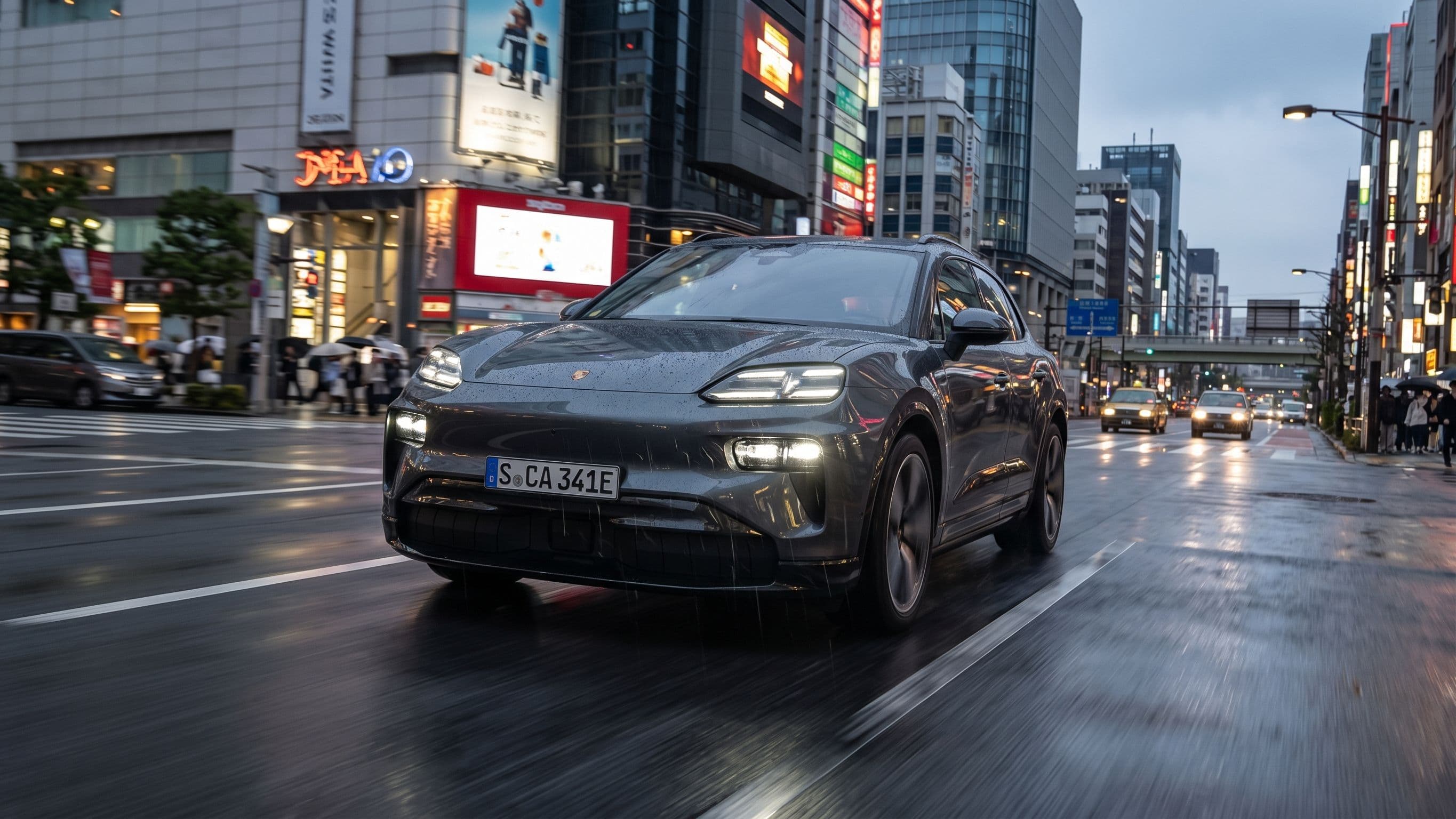
The Cayenne remained Porsche's best-selling model range, with 59,586 deliveries. The electric version accounted for 7,002 units. Photo: Porsche AG.
Porsche's latest figures reveal considerable differences between its model ranges.
The Cayenne remains the company's best-selling model, with 59,586 vehicles delivered during the first nine months of 2026, down just 2% compared with the previous year.
Interestingly, the new all-electric Cayenne has already contributed 7,002 deliveries since customer handovers began in summer 2026.
The Macan recorded 51,025 deliveries, representing a 21% decline. Of those vehicles, 23,029 were fully electric, while 27,996 were combustion-engined variants.
However, Porsche ended production of the petrol-powered Macan in summer 2026. As a result, the decline cannot be attributed solely to weaker demand.
The Panamera experienced a more substantial fall, with deliveries down 35% to 13,714 vehicles. The fully electric Taycan also struggled, recording 8,699 deliveries, a decline of 31%.
The sharpest percentage decrease was recorded by the 718 Boxster and Cayman, with just 3,291 vehicles delivered, down 79%.
That figure requires some context. Production of the previous 718 model range ended in October 2025, meaning the steep decline largely reflects the end of that generation's production and reduced vehicle availability rather than necessarily indicating a collapse in customer interest.
Porsche 911 Sales Rise 12% Despite the Downturn
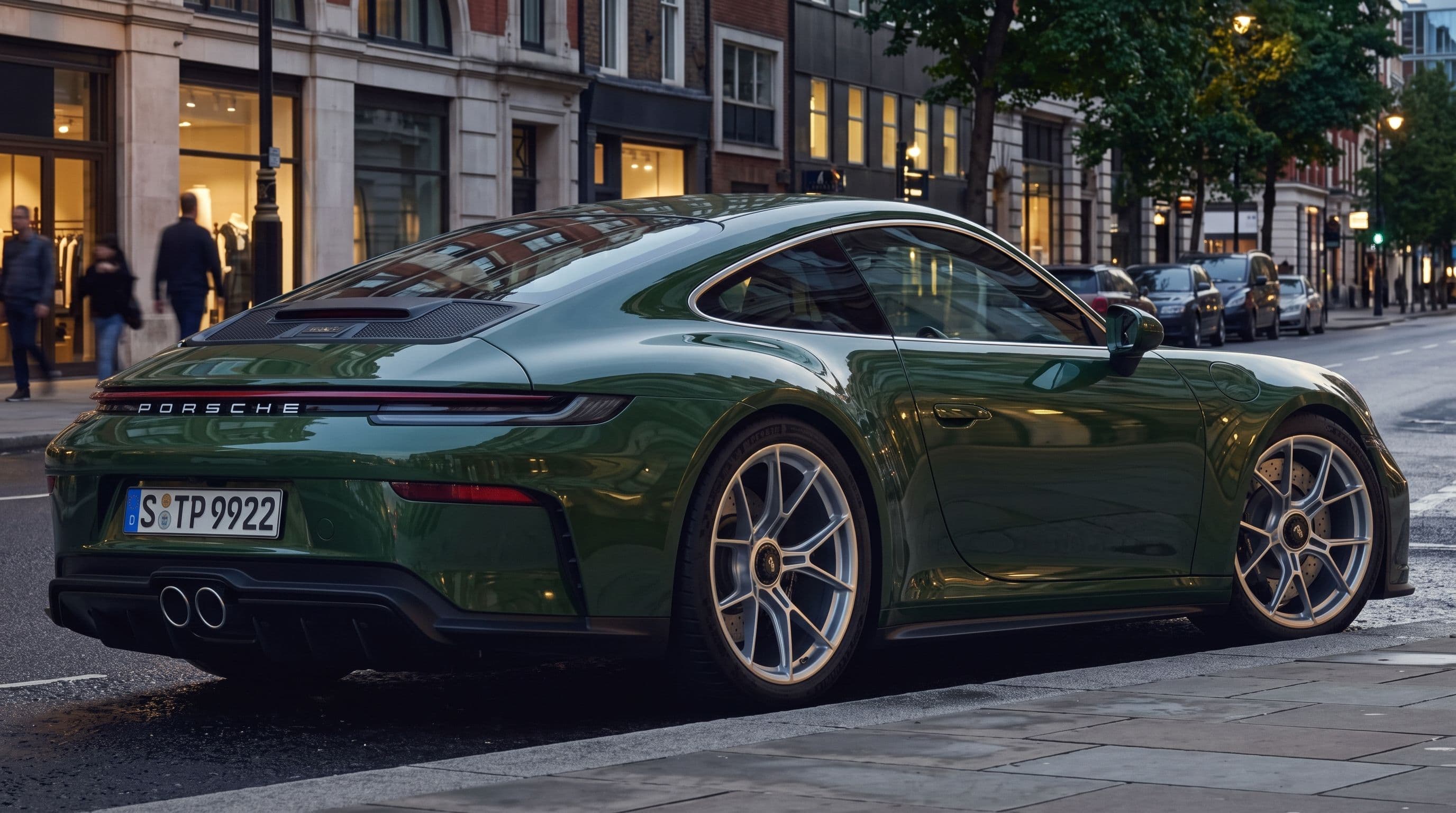
Porsche 911 deliveries rose 12% to 42,217 vehicles during January–September 2026. Photo: Porsche AG.
While several Porsche models have recorded significant declines, the 911 continues to perform remarkably well.
Between January and September 2026, Porsche delivered 42,217 examples of the 911 worldwide, representing a 12% increase compared with the same period last year.
The company also highlighted strong customer interest in its more exclusive GTS, Turbo and GT derivatives across the model range.
This is an important distinction.
The Porsche 911 is not the brand's highest-volume model. That position belongs to the Cayenne. Nevertheless, the 911 remains central to Porsche's identity as a sports car manufacturer.
Its growth suggests that demand for the company's most recognisable performance car remains resilient, even as the wider business faces a difficult sales environment.
That contrast becomes particularly interesting when viewed alongside Porsche's newly announced strategy.
China Sales Fall 33%: Porsche's Biggest Regional Decline
| Market | Jan–Sep 2025 | Jan–Sep 2026 | Change |
|---|---|---|---|
| Worldwide | 212,509 | 178,532 | −16% |
| North America | 64,446 | 56,088 | −13% |
| China | 32,195 | 21,493 | −33% |
| Europe (excl. Germany) | 50,286 | 44,949 | −11% |
| Germany | 22,492 | 20,954 | −7% |
| Overseas & Emerging Markets | 43,090 | 35,048 | −19% |
China remains one of Porsche's most challenging markets in 2026.
The manufacturer delivered 21,493 vehicles in China during the first nine months, compared with 32,195 over the same period in 2025.
That represents a 33% decline.
Porsche acknowledged that market conditions in China remain difficult and reiterated its intention to prioritise long-term brand value rather than pursuing short-term sales volume.
China is not the only region experiencing pressure, however.
North America, Porsche's largest sales region, recorded 56,088 deliveries, down 13% year-on-year. According to Porsche, the decline was mainly linked to the discontinuation of the 718 range and the particularly strong performance of the electric Macan during the comparable period in 2025.
Elsewhere, Germany recorded a 7% decline, while the rest of Europe fell 11%. Deliveries in overseas and emerging markets dropped 19%.
The figures demonstrate that Porsche's global decline is not solely a Chinese market problem. Model transitions and regional availability have also had a meaningful impact.
Why Are Porsche Sales Falling in 2026?
It would be tempting to interpret the 16% decline as evidence that customers are losing interest in Porsche. However, the manufacturer's own figures suggest a more complicated situation.
Several factors have contributed to the downturn.
The first is model availability. The end of production for the previous-generation 718 Boxster and Cayman has had a substantial impact on deliveries. The discontinuation of the combustion-engined Macan also creates a significant transition within one of Porsche's most commercially important model ranges.
The second is the comparison with 2025. Porsche enjoyed strong electric Macan deliveries during the previous year, making the equivalent period in 2026 more difficult to match.
The third is the challenging market environment. China has experienced the largest regional decline, while softer delivery figures across North America, Europe and emerging markets have added to the global decrease.
However, declining deliveries do not automatically translate into an equivalent reduction in revenue or profitability.
Those financial indicators depend on several additional factors, including vehicle pricing, production costs, equipment levels and the proportion of higher-margin models sold.
Porsche's latest delivery report provides an important picture of its sales performance, but it should not be mistaken for a complete assessment of the company's financial health.
Porsche's New 2035 Strategy: Value Over Volume
On 7 October 2026, Porsche presented its new Sportwagenschmiede '35 strategy during its Capital Markets Day.
The announcement outlines a shift towards greater exclusivity, more profitable models and a stronger focus on the characteristics that have traditionally defined the Porsche brand.
One of its central principles is “Value over Volume”.
Rather than measuring success primarily through the number of vehicles delivered, Porsche wants to generate greater value from each vehicle it sells.
The company is planning several changes:
- Approximately 20% fewer model variants, reducing complexity across its product range.
- An expanded range of exclusive and highly personalised vehicles, including greater emphasis on the Sonderwunsch customisation programme.
- Increased focus on higher-margin sports cars and premium D- and E-segment models.
- A lower financial break-even point, with the aim of making the business viable at annual sales volumes below 200,000 vehicles.
Porsche is also exploring a new mid-engined super sports car platform that could support a model positioned above the 911.
Another notable part of the plan concerns the manufacturer's future powertrain strategy.
Porsche intends to continue investing in combustion engines, plug-in hybrids and electric technology rather than committing its entire future to a single powertrain type.
These changes do not mean the company deliberately caused its recent delivery decline. Rather, they suggest Porsche is restructuring its business to become less dependent on selling ever-increasing numbers of cars.
Is Porsche Moving Closer to Ferrari's Business Model?
Porsche's renewed focus on exclusivity raises an interesting question: could the German manufacturer be moving closer to the business model traditionally associated with Ferrari?
There are similarities in the emphasis on brand desirability, high-performance models, personalisation and the value generated by each vehicle.
However, the two manufacturers still operate very different businesses.
Porsche sells a broad range of vehicles, including the Cayenne and Macan SUVs, the four-door Panamera and the Taycan electric saloon, alongside its traditional sports cars.
These models appeal to buyers seeking practicality, family usability and everyday comfort without giving up the Porsche badge.
Ferrari operates on a considerably smaller scale, with a more exclusive range of high-performance vehicles and a different pricing structure.
Lamborghini occupies a similarly exclusive part of the market, although the Urus SUV has considerably broadened its appeal.
Consequently, comparing these manufacturers purely by total vehicle deliveries would provide a misleading picture of their relative success.
What makes Porsche's new strategy interesting is that the company appears determined to preserve its broader customer base while placing greater emphasis on premium derivatives, personalisation and high-margin products.
It is a delicate balance. The Cayenne and Macan bring considerable sales volume, while models such as the 911 reinforce the performance credentials that help make the Porsche brand desirable in the first place.
Verdict: The Porsche 911 Tells a Different Story
A 16% decline in worldwide deliveries is significant, particularly when accompanied by a 33% fall in China and weaker results for several important models.
But the headline figures do not tell the entire story.
The 718's dramatic decline has been heavily influenced by the end of production, while the Macan is undergoing its own powertrain transition.
Meanwhile, the Cayenne remains Porsche's biggest seller, and the 911 continues to attract more customers than it did a year earlier.
That resilience is particularly relevant to Porsche's future direction.
The company's new strategy aims to reduce its reliance on high sales volumes while increasing the value of its products and strengthening the exclusivity of the brand.
Porsche is delivering fewer vehicles in 2026, but the 911's continued growth suggests that the qualities which made the company famous remain among its strongest assets.
The question now is whether Porsche can successfully translate that appeal into a more profitable and resilient business without losing the broader audience attracted by models such as the Cayenne and Macan.
Comments (0)
🌍 Drivisual.tv is visited from over 60 countries. No matter what language you write in, your thoughts can help a fellow car enthusiast on the other side of the world thanks to our instant AI translation. Feel free to share your thoughts in your native language!
No comments yet. Be the first to share your thoughts!
Leave a Reply