
Honda Hybrid Revealed: New Hybrid Technology Coming in 2027

Japanese car manufacturer Honda has officially announced Honda Hybrid as the name of its next-generation hybrid technology. Built upon an extensively developed version of the existing e system, the new technology will begin appearing in Honda models worldwide from 2027.
According to Honda's official announcement published on 9 October 2026, the next-generation system is being developed to deliver improved fuel efficiency, more responsive driving dynamics and a newly developed electric all-wheel-drive system.
Honda's plans extend well beyond updating its hybrid powertrain. The Japanese manufacturer is aiming to introduce 15 next-generation hybrid models globally by 31 March 2030, with North America playing a particularly important role in the rollout.
What Is Honda Hybrid? Is the e System Being Replaced?
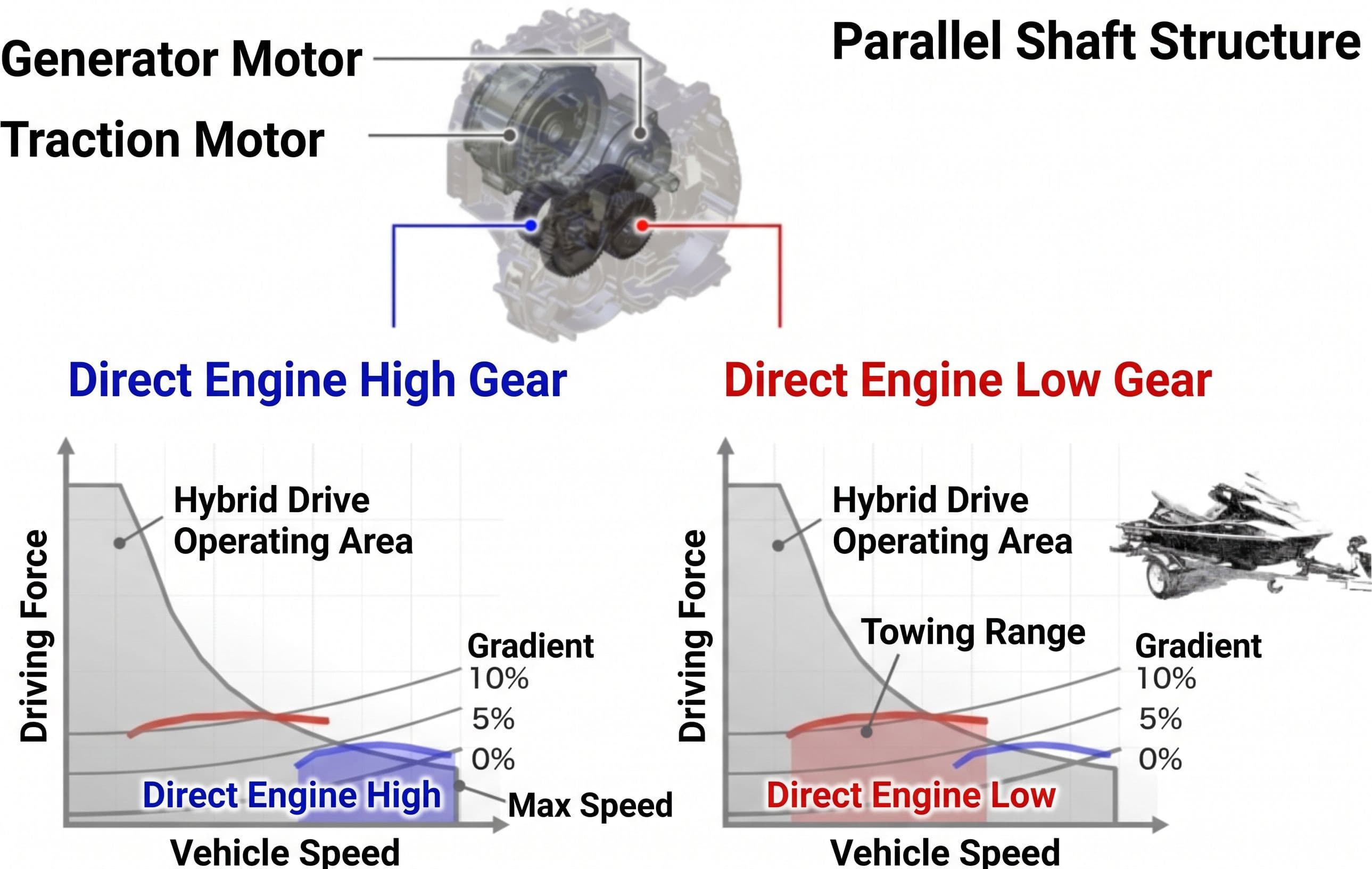
Two different direct motor drive ratios and operating conditions in Honda's new-generation hybrid system. Source: Honda Motor Co.
Honda Hybrid is the name given to the manufacturer's next-generation hybrid system, developed from its existing two-motor e technology.
In Honda's current e system, the petrol engine and electric motors work together in different ways depending on driving conditions. During much of everyday driving, the electric traction motor provides the power needed to move the vehicle, while the petrol engine either generates electricity or drives the wheels directly when conditions allow.
The new Honda Hybrid system retains this fundamental approach, but introduces further developments to the engine, electric drive unit and control software.
Honda is working to expand the range of operating conditions in which the petrol engine can run efficiently. At the same time, the electric drive unit is being made smaller and more efficient to reduce energy losses.
The company's earlier technical overview of its next-generation e technology also outlines developments to its 1.5-litre and 2.0-litre petrol engines, including improvements designed to increase combustion efficiency.
In other words, Honda Hybrid is more than a new badge. Honda is refining the key components of its existing hybrid technology as it prepares for a new generation of electrified vehicles.
Honda Targets More Than 10% Better Fuel Economy
Source: Honda Motor Co., Ltd. — May 2026 Business Strategy Announcement. Fuel economy and system cost figures represent manufacturer targets.
One of the most significant objectives behind the new system is reducing fuel consumption.
In its May 2026 business strategy announcement, Honda outlined a target of more than a 10% improvement in fuel economy through a combination of its next-generation hybrid system, a newly developed vehicle platform and electric all-wheel-drive technology.
To achieve this, the manufacturer is focusing on three main areas:
- Expanding the operating range in which the petrol engine can achieve high efficiency.
- Improving the efficiency of the electric drive unit while reducing its size.
- Reducing vehicle weight and improving driving dynamics through a new platform.
It is important to note, however, that this figure remains a development target rather than a verified real-world result.
Honda has yet to publish independent fuel consumption test results for production models equipped with the new system.
How much fuel drivers will actually save will depend on the individual model, its technical specifications and the conditions in which it is driven.
Honda Also Plans to Reduce Hybrid System Costs
Another major objective is making hybrid technology less expensive to produce.
Honda is targeting a reduction of more than 30% in hybrid system costs compared with the hybrid system introduced in 2023.
The company intends to achieve this through improvements in manufacturing processes, greater component sharing and cost optimisation across key parts, including electric motors and batteries.
There is an important distinction here: the proposed 30% reduction relates to the cost of the hybrid system itself, not the retail price of the entire vehicle.
It therefore does not mean that future Honda models will automatically be 30% cheaper to buy.
New Platform and e-AWD: Honda Focuses on Driving Dynamics
Fuel efficiency is not the only priority for the new Honda Hybrid technology.
Next-generation hybrid models will also use a newly developed vehicle platform. Honda aims to reduce weight, manage body rigidity more effectively and improve the way its vehicles behave through corners.
Among the technologies announced is the Motion Management System, Honda's integrated vehicle motion control technology.
The system is designed to help the vehicle respond more precisely to the driver's inputs, delivering a more controlled and engaging driving experience.
Honda has also confirmed the development of a new electric all-wheel-drive system (e-AWD).
By making use of precise electric motor control, the technology is intended to provide more sophisticated management of traction and vehicle stability.
However, Honda has not confirmed that every future Honda Hybrid model will feature e-AWD, nor has it specified that all vehicles will use an identical drivetrain configuration.
Launching in 2027: 15 New Hybrid Models Planned by 2030
The first new models equipped with Honda Hybrid technology are scheduled to reach global markets from 2027.
Honda aims to introduce 15 next-generation hybrid models by the end of its financial year ending on 31 March 2030.
During its May 2026 business strategy presentation, the company also unveiled two notable prototypes:
- Honda Hybrid Sedan Prototype: A preview of the direction Honda is taking with its next generation of hybrid saloons.
- Acura Hybrid SUV Prototype: A hybrid SUV concept developed for Honda's premium Acura brand.
At the time, Honda stated that production versions of these two prototypes were planned to go on sale within two years of the May 2026 announcement.
The manufacturer is also planning to expand its North American range with larger hybrid models in the D-segment and above from 2029.
Honda has not yet confirmed which of its next-generation hybrid models will be introduced to the UK market or when they might become available.
Why Is Honda Investing More Heavily in Hybrid Technology?
Honda's decision forms part of a wider shift in its global automotive strategy.
As demand for hybrid vehicles continues to grow across major markets, Honda has decided to allocate a greater proportion of its development and production resources to hybrid models.
In the restructuring plan announced in May 2026, the company identified North America, Japan and India among its priority markets.
This does not mean that Honda is abandoning battery-electric vehicles altogether.
Instead, the manufacturer is adapting its product strategy to changing market conditions, with hybrids expected to play a more prominent role in its near-term plans.
Drivisual Verdict: More Than Just a New Name
Perhaps the most important aspect of the Honda Hybrid announcement is the manufacturer's decision to build upon its existing e technology rather than abandon it in favour of an entirely different approach.
Honda wants to improve fuel efficiency without sacrificing the driving characteristics for which the brand is known.
Revised petrol engines, more compact electric drive units, a lighter vehicle platform and the new e-AWD technology all form part of that strategy.
Nevertheless, the targets of more than 10% better fuel economy and over 30% lower hybrid system costs remain manufacturer objectives rather than independently verified achievements.
Until the new models reach the road, it is impossible to establish how these improvements will translate into everyday ownership.
The real test for Honda Hybrid will begin in 2027, when drivers can assess the fuel consumption, driving performance and long-term reliability of the first production models.
Comments (0)
🌍 Drivisual.tv is visited from over 60 countries. No matter what language you write in, your thoughts can help a fellow car enthusiast on the other side of the world thanks to our instant AI translation. Feel free to share your thoughts in your native language!
No comments yet. Be the first to share your thoughts!
Leave a Reply