BMW M2 xDrive: First AWD M2! Enhanced Performance & Usability
The BMW M2 xDrive introduces AWD to the compact coupe for the first time. With 480 HP, 3.7s acceleration, and RWD-biased driving, the M2 is faster and more versatile.


What Does the BMW M2 xDrive Offer?
BMW has introduced the M xDrive all-wheel-drive system to the M2 for the first time, marking a significant change in the model’s history. Long known for its rear-wheel-drive layout, the M2 now gains a new variant offering greater traction and faster acceleration. This move also reshapes the M2’s position within BMW’s performance-focused lineup.
The new BMW M2 xDrive brings the all-wheel-drive technology used in the larger M3 and M4 models into the compact performance segment. At the same time, BMW has configured the system to remain rear-wheel-drive-oriented in order to preserve the model’s characteristic driving feel. As a result, the car aims to deliver not only higher performance but also more accessible performance in a wider range of driving conditions.
Within the BMW M portfolio, the M2 continues to serve as the brand’s entry-level high-performance coupe. However, with the addition of xDrive, the model now moves slightly closer to the performance territory occupied by the M3 and M4.
Engine and Performance Specifications
At the heart of the new BMW M2 xDrive is BMW M’s well-known S58 engine. The 3.0-liter twin-turbocharged inline-six produces approximately 480 hp and 600 Nm of torque in European specification. Power is transmitted exclusively through an eight-speed M Steptronic automatic transmission.
Thanks to the additional traction provided by the all-wheel-drive system, performance figures have improved noticeably. According to BMW, the new BMW M2 xDrive can accelerate from 0 to 100 km/h in approximately 3.7 seconds. This represents a few tenths of a second advantage over the rear-wheel-drive version.
Top speed is electronically limited to 250 km/h, while the optional M Driver’s Package increases the limit to approximately 285 km/h.
From a BMW M2 performance perspective, the new system is particularly beneficial during standing starts and on low-grip surfaces. As a result, the vehicle not only accelerates faster but also transfers its considerable power output to the road more effectively.
How Does the M xDrive System Work?
The BMW M xDrive system is designed as a performance-focused all-wheel-drive solution. Its defining characteristic is the preservation of the vehicle’s rear-wheel-drive driving dynamics.
Under normal driving conditions, the majority of engine power is sent to the rear axle. If the rear wheels approach their traction limits, an electronically controlled multi-plate clutch transfers power to the front axle as needed. This allows the system to provide additional grip only when required.
The M xDrive system works in conjunction with the Active M Differential. This electronically controlled differential continuously optimizes torque distribution between the rear wheels, enhancing both traction and corner-exit performance.
Drivers can choose between several driving modes:
- 4WD mode
- 4WD Sport mode
- Fully rear-wheel-drive mode
The 4WD Sport setting delivers a more pronounced rear-biased character, while the fully rear-wheel-drive mode is intended for enthusiasts seeking the traditional M2 driving experience.
Chassis, Handling and Driving Dynamics
BMW has also revised the chassis setup specifically for the new BMW M2 AWD version. Due to the addition of the all-wheel-drive system, the suspension, electronic control systems and traction management have all been recalibrated.
The vehicle comes equipped with Adaptive M Suspension as standard. The front axle features a double-joint spring strut design, while the rear axle uses a five-link independent suspension layout.
The steering system incorporates M-specific variable-ratio tuning. Braking duties are handled by the high-performance M Compound braking system. This combination is designed to provide strong endurance during track driving while maintaining acceptable comfort levels for everyday use.
According to BMW, the revised chassis setup aims not only to maximize grip but also to improve directional stability and steering precision at higher speeds.
Design and Exterior Details
The new BMW M2 retains its compact dimensions while continuing to showcase muscular proportions. Wide fenders, pronounced shoulder lines and an aggressive front-end design emphasize the model’s performance-focused identity.
Visually, the M2 xDrive differs very little from the rear-wheel-drive version. However, new color options are among the highlights of the launch. In particular, several new finishes available through the BMW Individual program stand out.
Aerodynamically optimized bumpers, enlarged air intakes and a rear diffuser further support the performance-oriented approach. The vehicle rides on a staggered wheel setup featuring 19-inch wheels at the front and 20-inch wheels at the rear. This configuration contributes to both handling performance and visual presence.
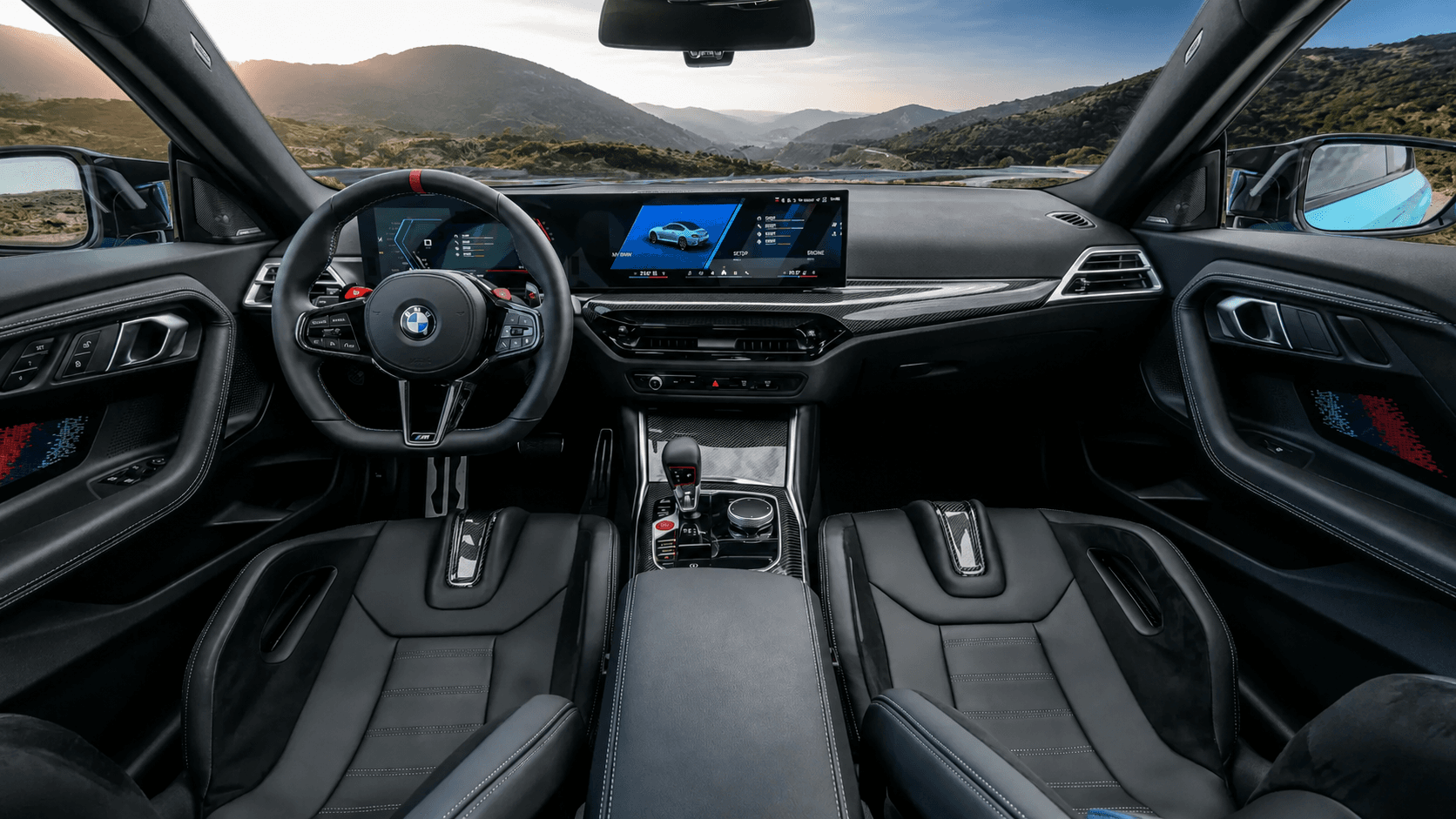
Interior and Technology
Inside, BMW’s latest digital architecture takes center stage. The BMW Curved Display combines a 12.3-inch digital instrument cluster and a 14.9-inch infotainment screen within a single curved panel.
The iDrive operating system allows extensive customization of driving modes and vehicle settings. M-specific graphics and performance displays provide drivers with real-time information tailored to spirited driving.
Carbon-fiber trim elements, M sports seats and performance-focused ergonomics define the cabin environment. In addition, adaptive cruise control, collision avoidance systems and a range of driver-assistance technologies are available.
Who Is the New BMW M2 xDrive for in Europe?
The BMW M2 xDrive does not replace the traditional rear-wheel-drive M2. Instead, it expands the model range by offering an alternative for buyers with different priorities.
The rear-wheel-drive M2 remains attractive to drivers seeking a purer and more mechanical driving experience. In contrast, the M2 xDrive makes high performance more accessible throughout the year and across varying road conditions.
The model can also be viewed as a more attainable alternative to the M3 and M4 xDrive models. Offering similar all-wheel-drive technology in a smaller and lighter package may prove particularly appealing to performance-car buyers across Europe.
In markets such as Germany, the United Kingdom, Austria and the Scandinavian countries, where weather conditions can vary significantly throughout the year, the BMW M2 all-wheel-drive system may provide a more balanced combination of performance and everyday usability.
Conclusion
The new BMW M2 xDrive represents one of the most significant technical changes in the model’s history. The introduction of the BMW M xDrive system gives the compact performance coupe greater traction, quicker acceleration and broader usability.
At the same time, BMW has not abandoned the model’s rear-wheel-drive roots. Thanks to the available drivetrain modes, much of the traditional M2 driving character remains intact.
When evaluated in terms of performance, daily usability and driving enjoyment, the BMW M2 xDrive emerges as a highly competitive option in Europe’s compact high-performance coupe segment. This new variant represents an important step in adapting the long-established M2 formula to modern performance expectations.
Comments (0)
🌍 Drivisual.tv is visited from over 60 countries. No matter what language you write in, your thoughts can help a fellow car enthusiast on the other side of the world thanks to our instant AI translation. Feel free to share your thoughts in your native language!
No comments yet. Be the first to share your thoughts!
Leave a Reply