
Toyota RAV4 Hybrid Problems: The Truth About "Cablegate" (2019-2025)

The Toyota RAV4 Hybrid is undeniably one of the best-selling and most reliable SUVs in North America. Thanks to its incredible fuel efficiency, spacious interior, and standard All-Wheel Drive (AWD), it has become the go-to vehicle for families across the US and Canada. However, beneath its stellar reputation lies a hidden and highly expensive issue that owners living in colder climates need to know about.
If you are researching Toyota RAV4 hybrid problems, you have likely stumbled across a controversial term online: "Cablegate." Whether you are looking to buy a used 2019-2021 model or you currently own one, understanding the high voltage cable corrosion issue, looking out for the early symptoms, and knowing the potential replacement cost can save you thousands of dollars.
What Exactly is the RAV4 "Cablegate" Issue?
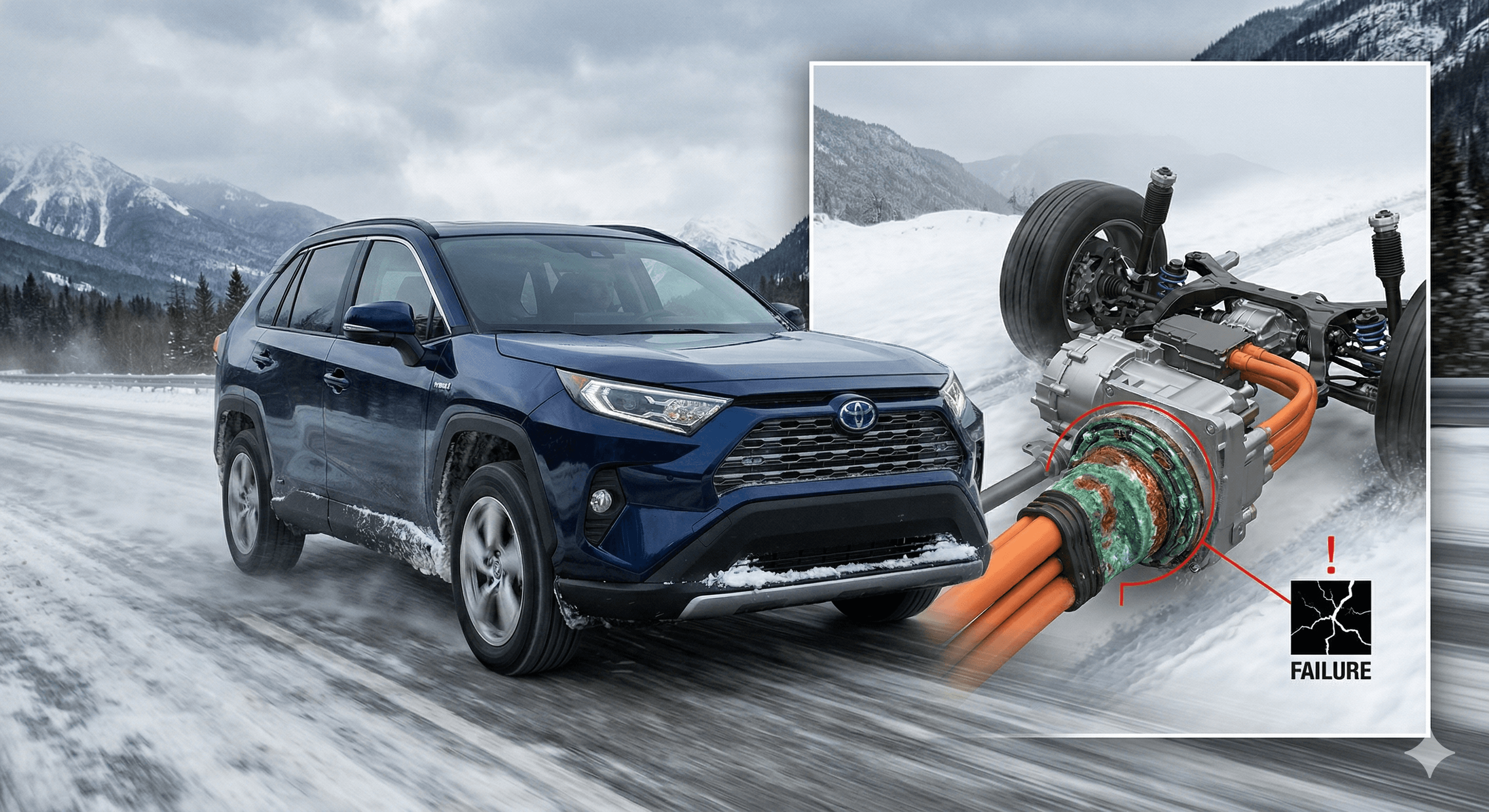
Close-up view of the rear motor and suspension. The high voltage cable connector is visibly corroded, leading to the dreaded "Cablegate" failure uyarısı.
The RAV4 Hybrid utilizes a clever AWD system where the rear wheels are powered entirely by a dedicated electric motor, rather than a traditional mechanical driveshaft. To supply power to this rear motor, a thick, orange high voltage cable runs under the length of the vehicle.
The "Cablegate" problem originates at the connection point where this cable meets the rear electric motor. Due to a design flaw in the early generations of this model (specifically the 2019, 2020, and 2021 model years), the connector is shaped like a bowl and lacks proper drainage.
When you drive through winter conditions in the US Snowbelt or Canada, saltwater and road debris get trapped inside this connector. Over time, this trapped moisture causes severe high voltage cable corrosion. The copper wiring oxidizes, degrades, and eventually snaps, severing the connection to the rear motor.
Early Signs of High Voltage Cable Failure
You do not need to be a mechanic or crawl under your SUV to know if your vehicle is falling victim to this issue. Toyota RAV4 Hybrid owners have reported several distinct symptoms leading up to a complete cable failure:
- AM Radio Static: This is one of the most bizarre but accurate early warning signs. As the braided metallic shielding around the high voltage cable begins to corrode, it creates electromagnetic interference. If you notice an unusual amount of static noise on AM radio stations while accelerating, corrosion has likely begun.
- AWD System Malfunction Warning: When the cable finally breaks, the rear electric motor loses power. Your dashboard will illuminate with a terrifying "AWD System Malfunction" or "Hybrid System Malfunction" message. At this point, your SUV becomes a front-wheel-drive vehicle, and the hybrid system may refuse to operate normally.
How Much Does the RAV4 Cable Replacement Cost?
When this issue first came to light, it shocked the automotive community. Because the high voltage cable and the connector are sold as a single, massive wiring harness, the repair is incredibly labor-intensive.
Before any official intervention, dealerships were quoting out-of-warranty owners anywhere from $4,000 to $6,000 for the cable replacement cost. To make matters worse, Toyota initially refused to cover this under the 8-year/100,000-mile hybrid battery warranty, claiming that "corrosion" was an environmental factor, not a manufacturing defect.
This massive out-of-pocket expense led to widespread outrage on forums and eventually resulted in class-action lawsuits against Toyota filed by frustrated consumers in both the United States and Canada.
Is There an Official Toyota Recall for Cablegate?
Despite the high volume of complaints registered with the National Highway Traffic Safety Administration (NHTSA), Toyota has not issued a formal safety recall for the high voltage cable corrosion. A recall is typically reserved for immediate safety hazards (like airbags or brakes).
Instead, Toyota opted for a Customer Support Program (CSP). In late 2022, Toyota officially extended the warranty specifically for the high voltage cable assembly. According to official Toyota communications, for the 2019-2022 RAV4 Hybrid and RAV4 Prime models, the warranty for this specific part is now extended to 8 years or 100,000 miles from the date of first use, whichever comes first. If a dealer detects the specific corrosion code, the replacement will be done free of charge.
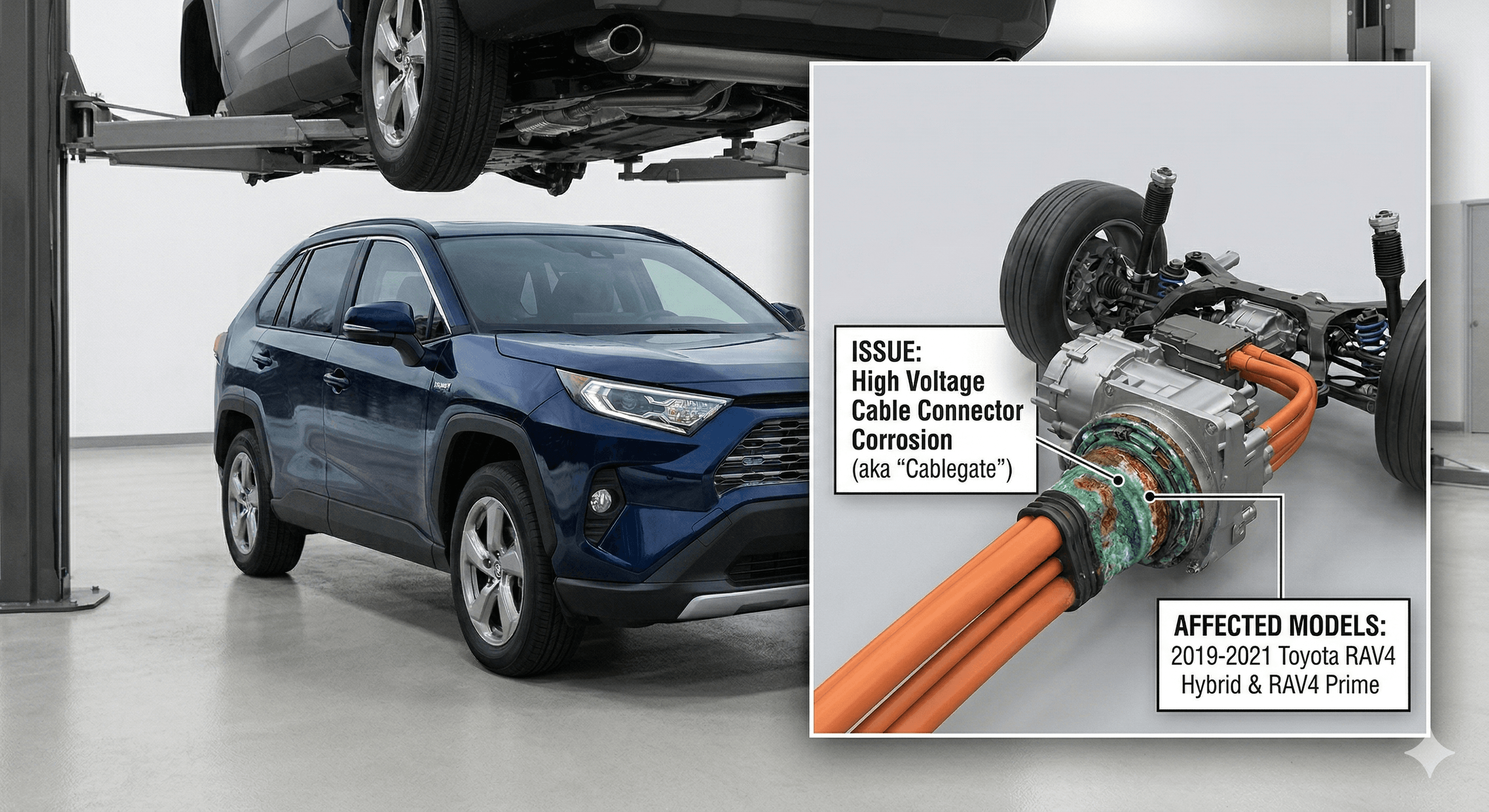
The severe high voltage cable corrosion (Cablegate) primarily affects the 2019, 2020, and 2021 Toyota RAV4 Hybrid and Prime models before the design was updated.
Are the 2024 and 2025 RAV4 Hybrids Safe from Cablegate?
If you are in the market for a brand new RAV4 Hybrid, there is good news. Toyota engineers acknowledged the design flaw and made crucial changes to the newer models.
Starting mid-way through the 2022 production year, and carrying over completely into the 2023, 2024, and 2025 Toyota RAV4 Hybrid models, the design of the high voltage cable connector was updated. The new design features a cut-out section that acts as a drain hole, preventing saltwater and debris from pooling around the copper connections.
While it is still too early to declare the new design 100% immune to decades of harsh winter driving, early reports suggest that the 2024 and 2025 RAV4 hybrid problems do not include the dreaded Cablegate.
Final Verdict: Should You Buy a Used RAV4 Hybrid?
The RAV4 Hybrid remains an exceptional vehicle. However, if you are purchasing a used 2019-2021 model in a cold-weather state or province, you must be proactive. Before signing any paperwork, demand that a mechanic inspects the rear high voltage cable connector for any signs of orange dust, heavy rust, or fraying. Knowing the truth about Cablegate is your best defense against a $5,000 repair bill.
Comments (0)
🌍 Drivisual.tv is visited from over 60 countries. No matter what language you write in, your thoughts can help a fellow car enthusiast on the other side of the world thanks to our instant AI translation. Feel free to share your thoughts in your native language!
No comments yet. Be the first to share your thoughts!
Leave a Reply