
BMW N13 Engine: Common Problems, Buying Guide & What to Look For

A Quick Note on Market Availability
Before we dive under the hood, let’s clear up a geographical detail. If you are reading this from the United States, you might be scratching your head. The N13 engine never made it to the US market; North American buyers started their F30 journey directly with the 2.0-liter N20 and 3.0-liter N55. However, in Europe, the UK, and especially in tax-heavy markets, the 1.6-liter 316i and the 170-hp 320i ED (EfficientDynamics) were absolute lifesavers. If you are dealing with one of these specific 1.6-liter global F30 models, this guide is for you.
What is the N13, Really? (The Famous Prince Engine)
Let's clear this up right away: this engine is not a purebred BMW block. It belongs to the "Prince" engine family, co-developed by Peugeot, Citroën, and BMW. PSA called this block the 1.6 THP and used it in their own cars. BMW took the same architecture, added their own Valvetronic (variable valve timing) system, mounted it longitudinally to fit the rear-wheel-drive F30, and named it the N13.
So, what's the difference between the 316i and the 320i ED? Most people will tell you it's "just software," but that's not exactly true. The main mechanical differences are the oil cooler, the high-pressure fuel pump, and the engine mapping. With these upgrades, the 320i ED reaches 170 horsepower, making it a highly sought-after option in tax-heavy markets.
What to Look Out For?
The N13 is a hot-running engine. Over time, that high heat takes a toll on the plastic and rubber components under the hood. If you're inspecting one or taking it to a mechanic, here are the critical details you must check:
1. Cold Start Misfires (The Cylinder Head Issue) Start the car when it's completely cold, or after it's been sitting for 3-4 hours. If the engine misfires or the RPM needle is constantly hunting and fluctuating, it could be a sign of a frustrating and expensive issue: valve seat failure. Cheap rebuilds rarely hold up, and often, the entire cylinder head needs to be replaced.
2. Oil Consumption and the PCV Test This engine is notorious for oil leaks and oil consumption. You can usually spot a leaking valve cover gasket by eye or by the smell of burning oil. But the real silent killer is a blown PCV (Positive Crankcase Ventilation) valve. There’s a practical way to check this: pull the intake pipe going into the turbo and stick your finger inside. If it's coated in sludgy oil, the PCV is likely blown, which is why the car is burning oil.
3. Torque Converter Especially on cars that have passed the 150,000 km (around 90,000 miles) mark, you need to check the condition of the transmission. If you’re cruising on a flat road at around 80-90 km/h (50-55 mph) with steady throttle, and the RPM needle randomly fluctuates up and down, it's a strong indicator that the torque converter is starting to fail.
4. Coolant Loss Seeing a "Coolant Level Low" warning on the dash is a frequent topic among N13 owners. The expansion tank or coolant hose seals can leak over time. However, drivers with a calm driving style experience this much less. For aggressive drivers who constantly push the car to its limits and shut off the engine without letting the turbo cool down, these plastic components surrender much faster.
5. Timing Chain The plastic chain guides can become brittle from the heat and break, causing the timing chain to stretch over time. If you hear a metallic, diesel-like rattle for the first 30 seconds on a cold start, you'll know it's time for a timing chain replacement.
The Golden Rule Before Buying (The 15-Minute Test)
Let's say you found a 316i or 320i ED, and everything looks great. Don't shake hands just yet. You must take the car for at least a 12-15 minute test drive. Once the engine reaches full operating temperature, if there is a hidden oil pressure issue, the screen might throw an "Oil Pressure Too High" or "Oil Pressure Too Low" warning. If you only take it for a quick spin around the block, you might miss these warnings entirely.
At the End of the Day: Should You Buy One?
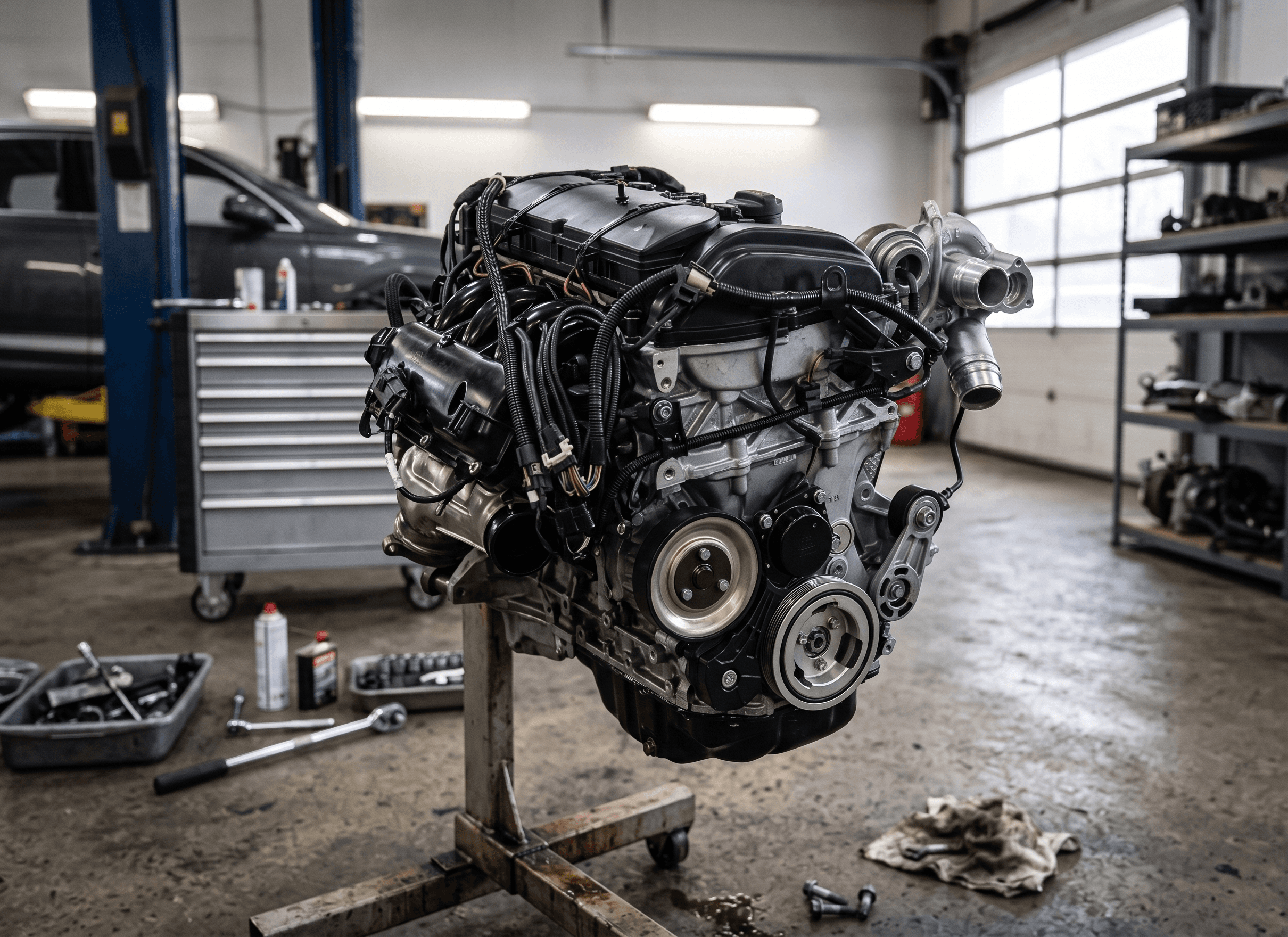
Bmw Prince N13
Is the N13 a completely flawed engine? No. With high-quality oil and preventative maintenance, an N13 can easily surpass the 200,000 km mark.
The real issue with these cars is the driving habits of their previous owners. Many of these cars fell into the hands of people who thought, "It's got a turbo, I'll tune it and push it." They were driven at the limit, and maintenance was often done with cheap aftermarket parts. There are a lot of tired examples on the market.
A car with an unknown history, oil leaks everywhere, and an aggressive tune will drain your wallet. But if you find a standard (stock) 316i or 320i ED with full service history, a steady idle on a cold start, a clean PCV pipe, and no warnings during a long test drive, it is a very enjoyable car for the price.
Comments (0)
🌍 Drivisual.tv is visited from over 60 countries. No matter what language you write in, your thoughts can help a fellow car enthusiast on the other side of the world thanks to our instant AI translation. Feel free to share your thoughts in your native language!
No comments yet. Be the first to share your thoughts!
Leave a Reply