
Why Are Euro 6 Engines So Sensitive? Common Problems

Why Are Euro 6 Engines So “Delicate”?
In recent years, one of the most common concerns among car owners has been:
“Why do new-generation Euro 6 engines fail more quickly?”
In reality, this is not due to poor quality—it is a direct result of stricter environmental regulations. While Euro 6 standards make engines cleaner, they also make them far more complex and dependent on sensitive systems.
In this article, we examine all the key reasons why Euro 6 engines are more sensitive—from technical aspects to user habits and fuel-related factors.
What Is Euro 6? A Quick Overview
Euro 6 is one of the European Union’s emission standards, specifically designed to significantly limit:
- NOx (Nitrogen Oxides)
- Particulate Matter (PM)
To meet these targets, vehicles are equipped with the following systems:
- DPF (Diesel Particulate Filter)
- EGR (Exhaust Gas Recirculation)
- SCR (AdBlue system)
This is exactly where the increased sensitivity begins.
Key Factors That Make Euro 6 Engines More Sensitive
1. DPF (Diesel Particulate Filter) Clogging
One of the most critical components in Euro 6 diesel vehicles is the DPF. It captures soot from the exhaust and cleans itself at high temperatures (regeneration).
Why do problems occur?
- Short-distance driving
- Low RPM usage
- Heavy traffic conditions
Under these conditions, the filter cannot regenerate properly and becomes clogged. This issue is especially common in urban driving.
Symptoms:
- Loss of power
- Increased fuel consumption
- Engine warning light
2. EGR Valve – The Enemy of Carbon Build-Up
The EGR system reduces emissions by recirculating exhaust gases back into the engine.
The problem:
- Exhaust gas = soot + contaminants
Over time, this leads to:
- EGR valve clogging
- Irregular engine operation
Low-quality fuel accelerates this process.
Symptoms:
- Rough idling
- Reduced performance
- Black smoke
3. SCR and AdBlue System – Chemical Sensitivity
The SCR (Selective Catalytic Reduction) system, widely used in Euro 6 engines, operates with AdBlue fluid. It is injected into the exhaust to neutralize harmful NOx gases.
Why is it sensitive?
- AdBlue can freeze (-11°C)
- Low-quality AdBlue can crystallize
- Injectors may clog
Common issues:
- “AdBlue system fault” warning
- Engine start prevention (in some models)
4. Extreme Sensitivity to Fuel Quality
Euro 6 engines operate with much tighter tolerances than older engines.
Low-quality fuel can:
- Damage injectors
- Contaminate DPF and EGR systems
- Harm the turbocharger
This is why “not all diesel is the same” matters much more with Euro 6 engines.
5. High Sensor and Electronics Density
Euro 6 vehicles include numerous sensitive components such as:
- Oxygen sensors
- NOx sensors
- Pressure sensors
What happens?
- Even a minor sensor fault
- Can trigger “limp mode” (fail-safe mode)
6. Incompatible Driving Habits
Euro 6 engines do not respond well to:
- Constant short trips
- Low RPM driving
- Long idling in traffic
Short-Distance Driving: The Biggest Enemy of Euro 6
Modern vehicles are not designed for:
- 3–5 km trips
- Frequent cold engine operation
Why?
- The engine cannot reach optimal temperature
- DPF regeneration cannot occur
- EGR accumulates carbon deposits
This leads to the perception of a “constantly failing vehicle.”
What these engines actually need:
- Long-distance driving
- High operating temperatures
- Periodic DPF regeneration
7. Software and Sensor Dependency
Compared to older vehicles, Euro 6 engines rely heavily on:
- Sensors
- ECU (Engine Control Unit)
- Software algorithms
What does this mean?
- A small sensor error → major warning message
- Software issue → performance loss
8. Fuel Quality: A Critical Requirement
For Euro 6 engines, fuel selection is no longer optional—it’s essential.
Key considerations:
- Low sulfur content
- Reliable fuel stations
- Balanced additives
Otherwise:
- DPF lifespan is reduced
- Injectors may be damaged
Are Euro 6 Engines Actually Problematic?
Short answer: No—but they are far more prone to issues when used incorrectly.
Euro 6 engines are:
- More environmentally friendly
- More technologically advanced
- But more sensitive ❗
In other words, they cannot be treated like older diesel engines.
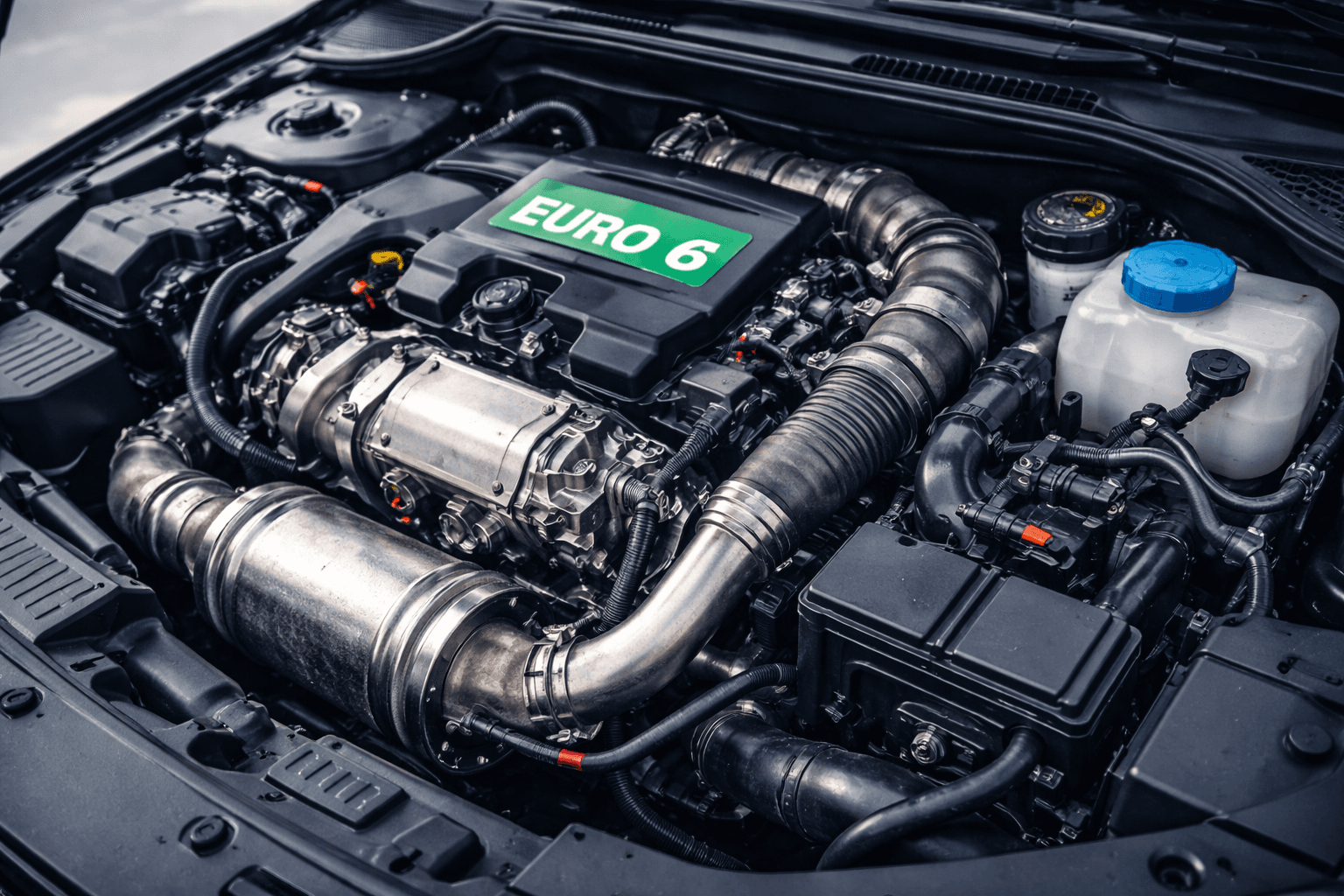
Euro 6 Diesel Engine
Golden Tips for Euro 6 Engine Owners
✔️ Adopt proper driving habits
- Take a longer drive once a week (15–20 minutes at higher RPM)
- Avoid pushing the engine when cold
✔️ Pay attention to fuel quality
- Always refuel at trusted stations
✔️ Use AdBlue correctly
- Choose high-quality, original products
- Do not let the tank run completely empty
✔️ Follow regular maintenance
- Do not neglect EGR and DPF cleaning
- Detect sensor faults early
✔️ Avoid constant low-RPM driving
Conclusion: Sensitivity = Technology + Emission Pressure
The main reason Euro 6 engines are more sensitive is simple:
👉 They are required to be cleaner
This results in:
- More components
- More sensors
- More potential risks
However, when used correctly, these engines can:
- Last a long time
- Offer better fuel efficiency
- Produce fewer emissions
Comments (0)
🌍 Drivisual.tv is visited from over 60 countries. No matter what language you write in, your thoughts can help a fellow car enthusiast on the other side of the world thanks to our instant AI translation. Feel free to share your thoughts in your native language!
No comments yet. Be the first to share your thoughts!
Leave a Reply