
What You Need to Know About Tire Pressure for Safe Driving

Your vehicle’s safety, fuel consumption, and road handling performance depend on a much simpler detail than you might think: tire pressure. Tire pressure is everything. Because the only part of your vehicle that touches the asphalt is the tire. From steering control to braking distance, from ride comfort to fuel efficiency, many critical factors are directly connected to maintaining the correct tire pressure.
Neglected or incorrectly adjusted tire pressure can increase braking distance, reduce road grip, raise fuel consumption, and create serious safety risks. That’s why understanding and maintaining the correct tire pressure is essential for safe driving.
Where Are the Correct Tire Pressure Values Written?
Your vehicle’s recommended tire pressure values are typically located in the following places:
- Inside the driver’s side door (door jamb / pillar area)
- Inside the fuel filler door
- In the vehicle owner’s manual
The most common location is inside the driver’s door frame.
This label usually includes:
- Front tire pressure (PSI / Bar)
- Rear tire pressure
- Recommended pressure for a fully loaded vehicle
- Spare tire pressure
How to Find the Correct Tire Pressure for Your Vehicle
To determine the correct tire pressure for the car you are driving:
- Open the driver’s door.
- Check the sticker located on the door pillar.
- Select the value that matches your tire size.
- If you cannot find the label, refer to the owner’s manual.
Some vehicles list different pressure values depending on wheel and tire size. That’s why it’s important to check your specific tire dimensions before adjusting the pressure.
How to Adjust Tire Pressure Correctly
Follow these steps to properly adjust your tire pressure:
- Find the manufacturer’s recommended pressure (written in PSI or Bar).
- Measure tire pressure when the tires are cold. (The most accurate measurement is taken in the morning before driving.)
- Use an air compressor at a gas station or a digital pressure gauge.
- If pressure is low, add air. If it’s too high, release air.
- Don’t forget to tighten the valve cap afterward.
👉 Important: As tires heat up, the air inside expands and pressure increases. Always measure and adjust tire pressure when the tires are cold.
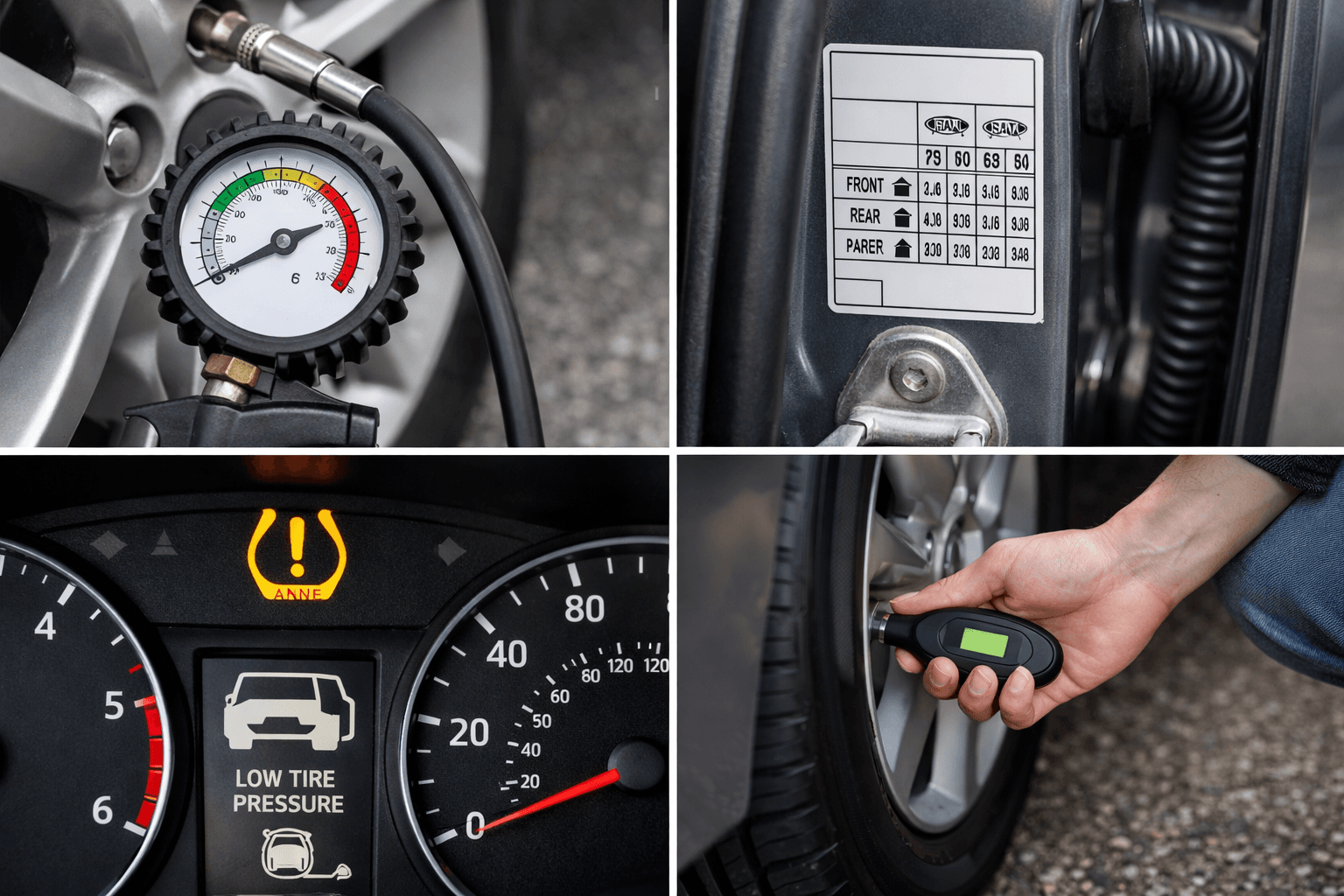
What Is TPMS (Tire Pressure Monitoring System)?
Many modern vehicles are equipped with TPMS (Tire Pressure Monitoring System), a safety feature that continuously monitors the air pressure inside your tires.
If you see the tire pressure warning symbol illuminated on your dashboard, it may indicate low tire pressure.
Why Does the TPMS Light Turn On?
- Tire pressure may have dropped
- Sudden temperature change
- A nail or air leak in the tire
- A faulty sensor
How to Reset TPMS
The reset process varies by vehicle, but generally:
- Adjust all tires to the correct pressure.
- Select the TPMS reset option from the dashboard menu.
- After driving a few kilometers, the system recalibrates automatically.
Some vehicles have a manual reset button, while others require resetting via the multimedia screen.
👉 Ignoring a TPMS warning can increase the risk of tire failure over time.
Should Tire Pressure Increase When the Vehicle Is Fully Loaded?
Yes. When your vehicle is fully loaded (5 passengers + luggage), tire pressure should usually be slightly higher.
On the driver’s door sticker, you will typically see two values:
- Normal load pressure
- Full load pressure
Why Increase Pressure in a Loaded Vehicle?
- Increased vehicle weight adds more load to the tires
- Low pressure causes excessive sidewall flex
- Overheating and blowout risk increases
For example:
If normal use recommends 32 PSI, full load may require 34–36 PSI.
This is especially important during:
- Long road trips
- Holiday travel
- Commercial vehicle use
Always follow the “full load” values listed on the label.
Should Tire Pressure Be Different in Summer and Winter?
Yes. Air temperature directly affects tire pressure.
- Pressure decreases in cold weather
- Pressure increases in hot weather
General rule:
For every 10°C (18°F) temperature change, tire pressure changes by approximately 1–2 PSI.
Therefore:
- Tire pressure should be checked more frequently during winter.
- Always measure pressure before long summer trips.
However, always follow the manufacturer’s recommended values listed inside the door frame. Overinflating beyond specifications is not recommended.
What Happens If Tire Pressure Is Incorrect?
Low Tire Pressure:
- Increased rolling resistance
- Faster shoulder wear
- Weaker steering response
- Longer braking distance
- Higher risk of blowout
High Tire Pressure:
- Reduced road grip
- Decreased comfort
- Center tread wear
- Reduced impact absorption
Incorrect tire pressure directly affects safe driving performance.
Why Is Tire Pressure So Important?
Maintaining correct tire pressure:
- Improves driving safety
- Reduces fuel consumption
- Extends tire lifespan
- Balances road grip
- Reduces blowout risk
This simple yet critical detail plays a major role in both your safety and your budget.
Tire pressure should be checked at least once a month. It must also be checked before long trips and during sudden temperature changes.
If you don’t know your vehicle’s correct tire pressure, open your driver’s door right now and check the label.
Remember: A small check prevents major risks.
Comments (0)
🌍 Drivisual.tv is visited from over 60 countries. No matter what language you write in, your thoughts can help a fellow car enthusiast on the other side of the world thanks to our instant AI translation. Feel free to share your thoughts in your native language!
No comments yet. Be the first to share your thoughts!
Leave a Reply