
Is the Stellantis 1.2 Hybrid Worth Buying? PureTech Truth

Stellantis 1.2 Hybrid Power Unit: What Has Changed After 1.2 PureTech?
One of the most discussed and perhaps most headache-inducing engines in the automotive world in recent years was undoubtedly the Stellantis group's 1.2 PureTech engine. Due to the "wet belt" (oil-bathed timing belt) problem, thousands of users were stranded on the roads and faced serious repair costs.
To leave this bad reputation behind, Stellantis changed the engine's name to "1.2 Hybrid" starting in 2023 and moved to a chain system, throwing the chronic belt problem in the trash. But did Stellantis, making massive investments, truly achieve trouble-free status with this new generation engine? What is the situation in popular models frequently searched for, such as the Peugeot 3008 Hybrid 136, Opel Astra Hybrid, and Jeep Avenger Hybrid? Let's take a closer look at the differences between the 1.2 PureTech and the new 1.2 Hybrid, transmission changes, and current field data.
1.2 PureTech vs. 1.2 Hybrid: What Was Improved?
The most wondered question by users is: Is the new engine just a version of the old block fitted with a chain? No. To meet emission rules, Stellantis completely changed the engine's thermodynamic working principle by switching to the Miller Cycle and integrated a Variable Geometry Turbocharger (VGT) system.
The most pleasing development was abandoning the timing belt torn apart by fuel mixing into the oil and returning to a metal chain. So, the era of "the belt shattered, the engine seized" is definitively closed for new generation vehicles like the Peugeot 3008 Hybrid 136, Opel Astra Hybrid, and Jeep Avenger Hybrid.
| Feature | Old Generation (1.2 PureTech) | New Generation (e.g. Peugeot 3008 Hybrid 136) |
|---|---|---|
| Timing System | Wet Timing Belt (Oil-Immersed) | Timing Chain (Metal) |
| Transmission | EAT8 (Aisin - Smooth) | e-DCS6 (Punch Powertrain - Jerky) |
| Thermodynamic Cycle | Otto / Atkinson Cycle | Miller Cycle |
| Turbo Type | Fixed Geometry Turbo | Variable Geometry Turbo (VGT) |
| Electric Support | None | 48V Mild Hybrid (21 kW e-Motor) |
Farewell to the EAT8 Legend, Hello to the e-DCS6 Problem
Let's come to the most criticized issue that upsets users the most: the transmission change.
Stellantis previously used the Japanese Aisin-produced EAT8 full automatic transmission, known for its smoothness and high durability. EAT8 was a great transmission for those seeking trouble-free operation and comfort. However, when switching to the new hybrid system (for example, in Opel Astra Hybrid and Peugeot 3008 Hybrid 136 models), Stellantis abandoned the EAT8 and transitioned to the e-DCS6 dual-clutch transmission produced by the Belgian Punch Powertrain company.
The result, unfortunately, was a huge disappointment. Jeep Avenger Hybrid and Peugeot 3008 Hybrid 136 users report experiencing significant jerks, unstable gear shifts, and delays when pressing the gas pedal, especially in stop-and-go city traffic during the transition from the electric motor to the gasoline engine. Although Stellantis had to buy the entire Punch Powertrain partnership to fix this production quality issue, this transmission remains a big question mark for those seeking the smoothness of the EAT8.
Fuel Consumption: Are the 9-10 Liter Complaints Over? (City vs. Highway)
In the old 1.2 PureTech engines, users' complaints about 9-10 liters of city fuel consumption were quite famous. In the new generation Peugeot 3008 Hybrid 136 and Opel Astra Hybrid models, this problem seems largely solved for normal daily use. According to user feedback, in heavy city traffic and mixed use, the vehicles achieve highly successful values in the range of 5.9 to 6.5 liters / 100 km.
However, the coin has two different dark sides:
- Highway Consumption: The extra weight brought by the electric motor and battery turns into a disadvantage on long trips. Especially when hitting the highway in the 130-140 km/h speed band with a Jeep Avenger Hybrid or Peugeot 3008 Hybrid 136, since the internal combustion engine has to both carry the heavy body and charge the battery, the consumption advantage is lost, and the values can reach 8-9 liters again.
- High Altitude Problem: As emphasized in the detailed automotive reviews prepared on the subject, an interesting problem is experienced especially at altitudes of 1500 meters and above (in cities like Erzurum) with vehicles like the Peugeot 3008 Hybrid 136. Because the atmospheric pressure drops at high altitudes, the electric pump providing the required vacuum for the braking system is insufficient. For braking safety, the vehicle does not turn off the gasoline engine even if the battery is full. This situation causes the vehicle, which is expected to consume 6 liters in the city, to rise back to 10 liters/100 km levels at high altitudes or tough conditions.
Unresolved and Emerging Problems in the New Generation
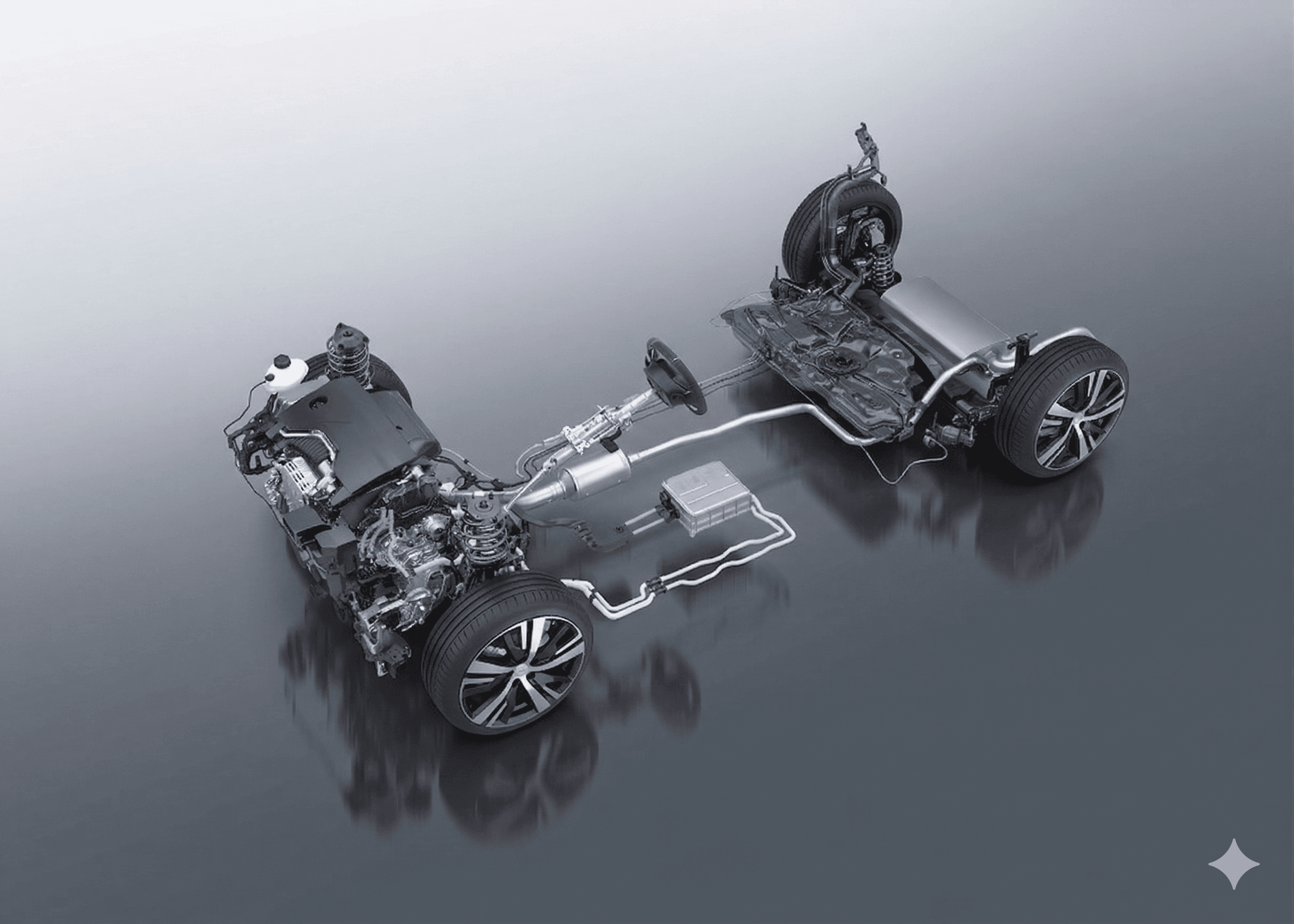
1.2 Hybrid Platform 48v mild hybrid
Although the timing belt problem has been solved, this brand new and rushed electronics/transmission integration has created new problems for users in many models, including the Opel Astra Hybrid and Jeep Avenger Hybrid. The currently most frequently encountered problems are:
- 48V Hybrid System (BSG) Crashes: Communication errors occur in the module managing the system and battery management software. Vehicles like the Jeep Avenger Hybrid can suddenly give a "Check Hybrid System" warning, cut electric support, lose power, and stall the vehicle.
- March 2026 Fire Risk and Recall: This is the newest and most dangerous problem. Especially in the new engine compartment, which includes the Peugeot 3008 Hybrid 136 and Jeep Avenger Hybrid, sufficient physical space was not left between the protective cover of the 48V starter-alternator and the exhaust particulate filter pipe. This part, rubbing with vibration, wore out, took in water, and caused short circuits and fires inside the engine. Therefore, Stellantis urgently called more than 211 thousand vehicles to service in Europe.
The Cost of a Cost-Cutting Strategy
The main reason why the new 1.2 Hybrid engine causes so many problems as soon as it hits the market, despite its 10-year PureTech history, is Stellantis' extreme cost-cutting strategies. The management tried to make the transition to hybrid and electric vehicles cheap, but it backfired. The problem with stranded next-generation Peugeot 3008 Hybrid 136 or Opel Astra Hybrid vehicles is actually the poorly integrated hybrid technology attempted to be produced cheaply, rather than the mechanical engine block.
Indeed, the Stellantis management recently admitted that they miscalculated the speed of the transition to electrification, and simply to solve these quality problems and compensate for mistakes, they announced a massive balance sheet loss of 22.3 billion Euros in 2025.
Box Content: Which Vehicles Have This New Engine and Transmission?
According to (https://www.somobility.fr/fiabilite-hybrid-136/), the models using the e-DCS6 transmission and chain-driven 1.2 Hybrid combination are:
- Peugeot: 208, 2008, 308, Peugeot 3008 Hybrid 136, 408, 5008
- Citroën: C4, C5 Aircross
- Opel: Corsa, Opel Astra Hybrid, Grandland
- DS: DS3, DS4
- Fiat / Alfa Romeo / Jeep: 600, Junior, Jeep Avenger Hybrid
⚠️ Attention: Practical Advice Before Buying and For Usage
The 10 year / 180,000 km warranty extension given for old generation engines in the past is only valid for engines with the old generation oil-bathed belt (wet belt). If you buy a new chain-driven 1.2 Hybrid, you are subject to standard warranty conditions. If you are considering buying a vehicle with this power unit, be sure to pay attention to these steps:
- Check the History: Be sure to check the entire history of recalls (especially fire risk-oriented insulation revisions) and software updates for the relevant model from the authorized service.
- Look at Error Codes: Make sure that the vehicle's brain does not have any hidden fault codes related to gear shifts or the hybrid system, including P1749 00 and P28EA 62.
- Don't Skip the Test Drive: In the test drive to be done before purchasing, thoroughly test the gear shifts of the e-DCS6 transmission in real-world conditions. Pay attention to unusual noises or vibrations, especially at low speeds in the city.
- Extend the Warranty: To eliminate current uncertainties regarding long-term reliability and to protect against transmission/electronic failure risks, seriously consider extending the warranty period to up to 8 years.
Conclusion and Buying Advice: Should You Buy or Wait?
To summarize; Stellantis has completely solved the terrifying timing belt problem of the 1.2 PureTech by switching to a chain and has created a much more efficient engine block technically (Miller cycle, VGT turbo). However, brand new models like the Peugeot 3008 Hybrid 136, Opel Astra Hybrid, and Jeep Avenger Hybrid are currently experiencing the integration pains of a not-yet-fully "matured" e-DCS6 transmission and 48V mild hybrid system.
As for our personal advice; at this stage, the most logical path is to wait a little longer to buy vehicles with this engine. Waiting until the transmission jerks, BSG (starter-alternator) malfunctions that leave you stranded suddenly, and assembly errors leading to fire risks are completely resolved by Stellantis on the production lines will save you from being a "test subject". When these current problems are permanently stabilized in terms of software and hardware, vehicles like the Peugeot 3008 Hybrid 136 and Opel Astra Hybrid will become great options; but until that day, not rushing will be the safest choice.
Comments (9)
🌍 Drivisual.tv is visited from over 60 countries. No matter what language you write in, your thoughts can help a fellow car enthusiast on the other side of the world thanks to our instant AI translation. Feel free to share your thoughts in your native language!
3008
astraking
handoze
Citroen C4 driving
comollloo
Metin
Avenger_24
melih
Mert
Leave a Reply