What Has Changed After the Porsche Cayenne Facelift? A Stronger Turbo GT and a New Hybrid Era
The 2026 Porsche Cayenne enters a new era with its facelift. Redefining the SUV segment with sharper design, digital cockpit, and advanced plug-in hybrid options.


Contents
- Porsche Cayenne Enters a New Era
- Sharper Design Language and a Stronger Visual Identity
- The Digital Cockpit Era with Porsche Driver Experience
- Cayenne Turbo GT Becomes More Powerful and More Focused
- New Plug-in Hybrid Options Deliver Greater Electric Range
- Cayenne’s Position in the Premium SUV Segment
- Cayenne’s Role in Porsche’s Electrification Strategy
- Expert Opinion
- Conclusion / Overall Evaluation
Porsche Cayenne Enters a New Era
In the premium SUV world, some models stand out not only through sales success but also through their influence on the segment. The Porsche Cayenne belongs firmly to this category. While the idea of bringing sports car DNA into a high-riding platform once appeared controversial, Cayenne has now become one of the key pillars of Porsche’s global success.
The world premiere held on May 28, 2026, opens a new chapter in the Cayenne story. Porsche did not limit the facelift operation to visual updates alone. From design details and digital user experience to performance character and plug-in hybrid architecture, the SUV received a broad package of improvements.
The resulting picture suggests that Porsche is no longer committed to a single powertrain vision. The brand is preserving its internal combustion performance heritage while placing electrification more firmly at the center of its product strategy.
Sharper Design Language and a Stronger Visual Identity
At first glance, the facelifted Porsche Cayenne may not appear entirely new, but a closer look reveals the depth of the transformation.
A More Aggressive Front-End Character
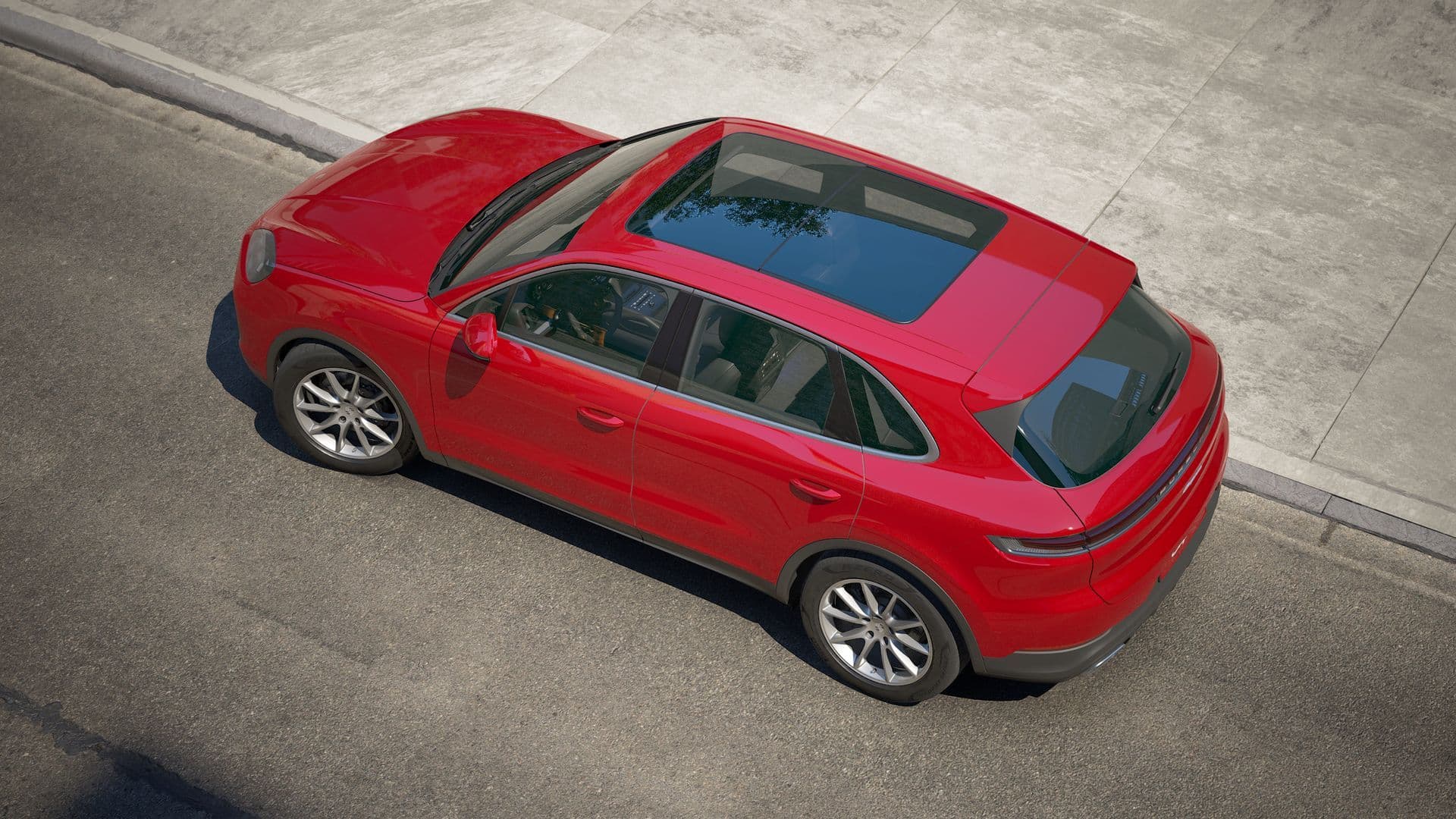
At the front, reshaped bumpers, enlarged air intakes, and sharper lines give the Cayenne a more athletic stance. Porsche appears to have chosen refinement over dramatization.
The updated headlamp architecture sits at the center of this transformation. Revised LED technology and a more distinctive light signature enhance nighttime visibility while aligning with the brand’s contemporary design language.
This approach carries particular significance in the European market. Premium SUV customers increasingly seek not only bold styling but also details that visually communicate technological sophistication.
A More Contemporary Rear Identity
At the rear, Porsche retains the horizontal lighting philosophy seen across its latest model lineup.
Updated taillight graphics and revised diffuser details reinforce the Cayenne’s wider and more planted appearance. The design language is not radical, but it creates a more mature and technical character.
This is where Porsche appears to have achieved an important balance. The Cayenne feels updated without losing its identity.
The Digital Cockpit Era with Porsche Driver Experience
One of the most significant changes introduced through the facelift takes place inside the cabin.
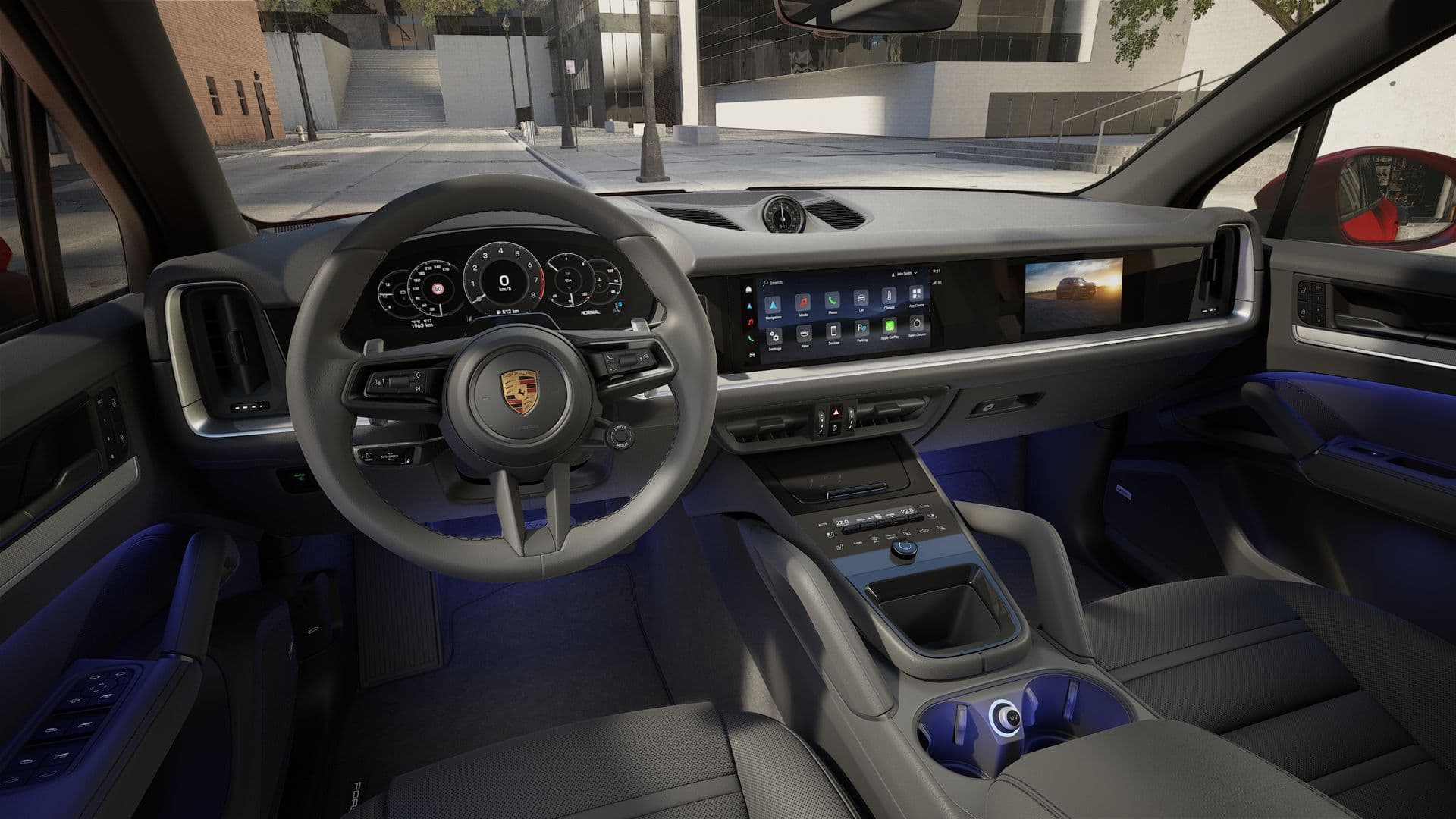
Porsche describes its next-generation user interface as “Porsche Driver Experience.” This concept goes beyond simply adding larger screens; it aims to redefine the interaction between driver and vehicle.
New Cockpit and Infotainment Experience
Stepping inside, the first noticeable element is the stronger sense of digitalization.
While the driver-focused layout remains intact, the updated screen architecture presents a cleaner and more modern environment. Porsche’s decision not to abandon physical controls entirely also stands out as an important ergonomic choice.
The new infotainment system attracts attention with faster processing capability, enhanced connectivity features, and a more fluid interface.
Rather than imitating a fully digital Tesla-style approach, Porsche continues to preserve its own character. The brand remains focused on a premium user experience centered around the driver.
What Does User Experience Mean in Daily Life?
Technological updates often remain confined to specification sheets. In the Cayenne, however, the digital transformation has a direct impact on daily usability.
Faster navigation response, improved voice commands, and simplified menu structures help reduce driver workload, particularly in urban driving.
For premium SUV customers, comfort is no longer defined solely by suspension quality. Digital ergonomics has become an essential component of the luxury experience.
Cayenne Turbo GT Becomes More Powerful and More Focused
The performance flagship of the Cayenne family, the Turbo GT, also benefits significantly from the update.
The V8 Character Remains Intact
At a time when many manufacturers are moving away from high-performance combustion engines, Porsche is taking a different path.
The upgraded V8 powering the Turbo GT reflects the brand’s commitment to preserving its performance heritage. Yet higher power figures alone do not tell the whole story.
What matters most is the preservation of throttle response and engine character.
For Porsche, performance is not merely about acceleration figures; it is about the mechanical connection between driver and machine. The updated Turbo GT aims to maintain precisely that philosophy.
Is the Performance Character Changing?
The key question is this: does more technology and greater electrification dilute Porsche character?
Initial technical data and Porsche’s engineering approach suggest otherwise.
Chassis tuning, steering feedback, and driving modes remain rooted in a driver-focused setup. The Cayenne continues to be a comfortable luxury SUV without becoming isolated or disconnected from the driving experience.
This remains one of Porsche’s strongest advantages in the premium SUV segment.
New Plug-in Hybrid Options Deliver Greater Electric Range
The most strategic step in the 2026 Porsche Cayenne facelift lies in its new plug-in hybrid variants.
Porsche no longer positions PHEV systems merely as transitional solutions designed to satisfy emissions regulations.
The Second Chapter of Hybrid Technology
The new Cayenne hybrid models highlight increased battery capacity and longer electric driving range.
This development is particularly significant for the European market.
Low-emission urban zones, corporate taxation policies, and rising fuel costs are pushing premium SUV customers toward electrification.
The Cayenne PHEV positions itself precisely at this intersection.
Electric driving capability makes daily commuting more economical while preserving long-distance flexibility and performance character.
Hybrid Performance in Everyday Use
The greatest advantage of plug-in hybrid systems is not range alone.
The electric motor’s instant torque support provides smoother acceleration, especially in city driving. Quiet operation enhances the premium feel, while the combustion engine still delivers the unmistakable Porsche experience when called upon.
For this reason, Porsche’s new Cayenne hybrid approach does not feel like a forced compromise between performance and efficiency.
Instead, it feels like a balanced fusion of both worlds.
Cayenne’s Position in the Premium SUV Segment
The premium SUV class has become more competitive than ever.
The BMW X5, Mercedes GLE, and Range Rover each present a distinct character.
The BMW X5 stands out with driving dynamics and advanced technology, while the Mercedes GLE offers a strong proposition centered on comfort and everyday usability. The Range Rover elevates luxury and prestige to a different level.
The Cayenne, however, occupies a more focused yet clearly defined position within this competition.
Porsche’s SUV performance philosophy continues to place driving experience at the center.
As a result, Cayenne appeals not only to buyers seeking luxury SUVs but also to those unwilling to abandon sports car character.
This identity is particularly important in Europe.
Premium customers increasingly make decisions not solely based on equipment lists but also on brand character.
Cayenne’s Role in Porsche’s Electrification Strategy
Porsche does not define electrification as a complete departure from combustion engines.
While the Macan Electric and future electric Cayenne projects point toward the brand’s future, the current Cayenne PHEV lineup occupies the center of this transition period.
This strategy is notable.
On one hand, V8 performance remains preserved; on the other, electric range continues to improve.
Porsche’s message is clear: electrification is not an alternative to driving excitement but a new way of sustaining it.
Expert Opinion
The facelifted Porsche Cayenne is not chasing a radical revolution.
Its success may lie precisely there.
Rather than dramatically reinventing the Cayenne, Porsche appears to have refined the areas where it was already strongest. The design is more modern, the digital experience more mature, the hybrid architecture more logical, and the Turbo GT still represents the brand’s performance DNA.
For this reason, the 2026 Cayenne should be viewed not merely as a refreshed SUV but as one of the clearest expressions of Porsche’s multi-powertrain strategy.
Conclusion / Overall Evaluation
The new Porsche Cayenne 2026 presents itself as a model attempting to redefine the concept of balance within the premium SUV segment.
On one side stands the more powerful Turbo GT and its preserved V8 character; on the other, increasingly advanced plug-in hybrid systems. The refreshed design and Porsche Driver Experience cockpit complete this technical evolution with a more contemporary user experience.
Ultimately, the Cayenne does not compete with rivals such as the BMW X5 or Mercedes GLE solely through equipment or performance figures. Porsche’s true advantage lies in preserving driving character while presenting electrification as a natural evolution.
That makes the Cayenne one of the most closely watched players in the premium SUV market of 2026.
Comments (0)
🌍 Drivisual.tv is visited from over 60 countries. No matter what language you write in, your thoughts can help a fellow car enthusiast on the other side of the world thanks to our instant AI translation. Feel free to share your thoughts in your native language!
No comments yet. Be the first to share your thoughts!
Leave a Reply